7 Most Affordable Electric Cars on the Market in 2026
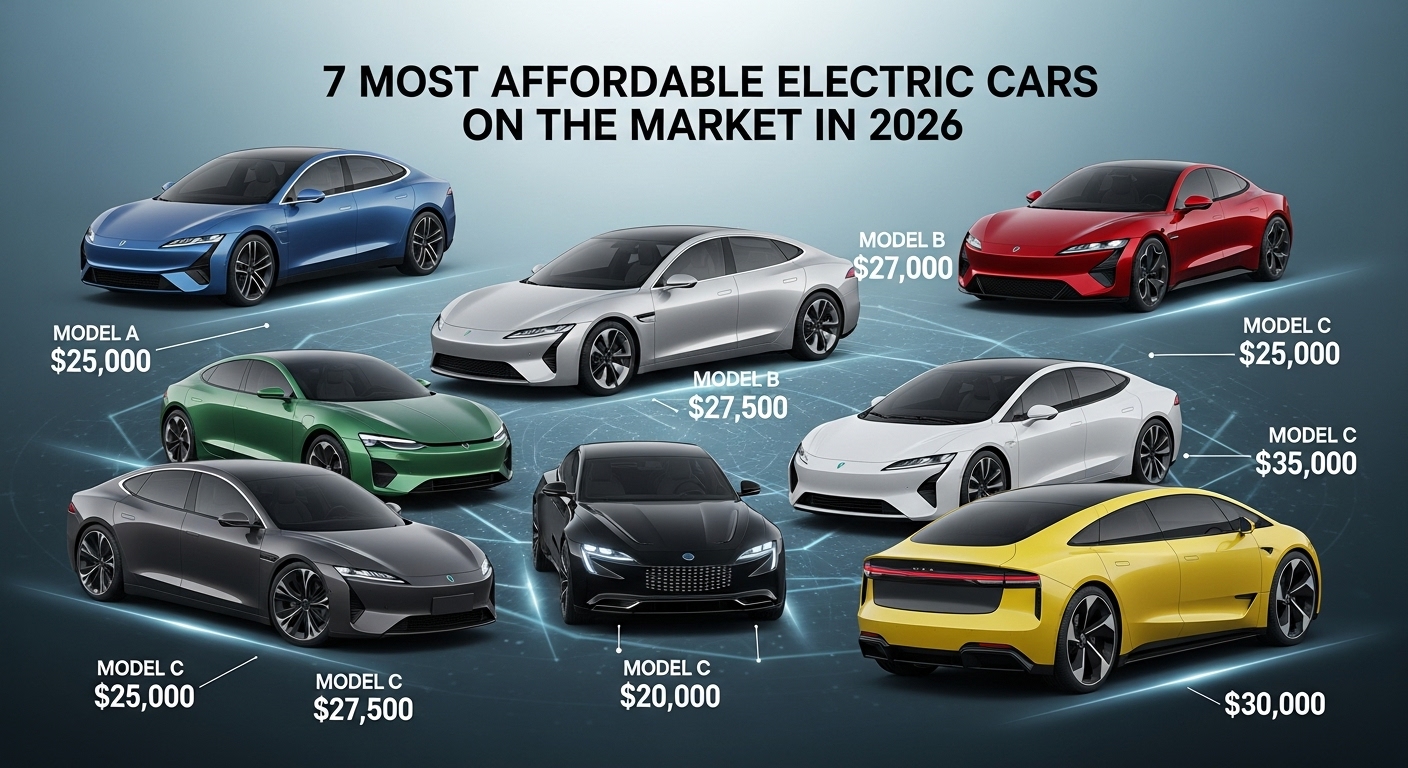
The best budget-friendly electric cars in 2026 offering excellent range, safety, and value for money.
7 Most Affordable Electric Cars on the Market in 2026
Introduction
Electric cars (EVs) are no longer just a luxury for the wealthy—they’re becoming more affordable and accessible than ever. With rising fuel costs and eco-conscious choices on the rise, many drivers are switching to electric vehicles. But which options offer the best value for your money?
In this article, we’ll explore 7 of the most affordable electric cars on the market in 2026, highlighting their prices, battery range, features, and overall value. Whether you’re a first-time EV buyer or just looking for a budget-friendly upgrade, this guide has you covered.
Why Choose an Affordable Electric Car?
Switching to an electric car offers numerous benefits:
-
Lower running costs: Electricity is cheaper than gas, and EVs require less maintenance.
-
Environmental impact: EVs produce zero tailpipe emissions, helping reduce pollution.
-
Government incentives: Many countries offer tax credits or rebates for buying electric cars.
-
Modern features: Even budget EVs now come with advanced tech like touchscreen infotainment, driver-assist systems, and smart charging.
Choosing an affordable EV doesn’t mean compromising on features or quality—it just means smart shopping.
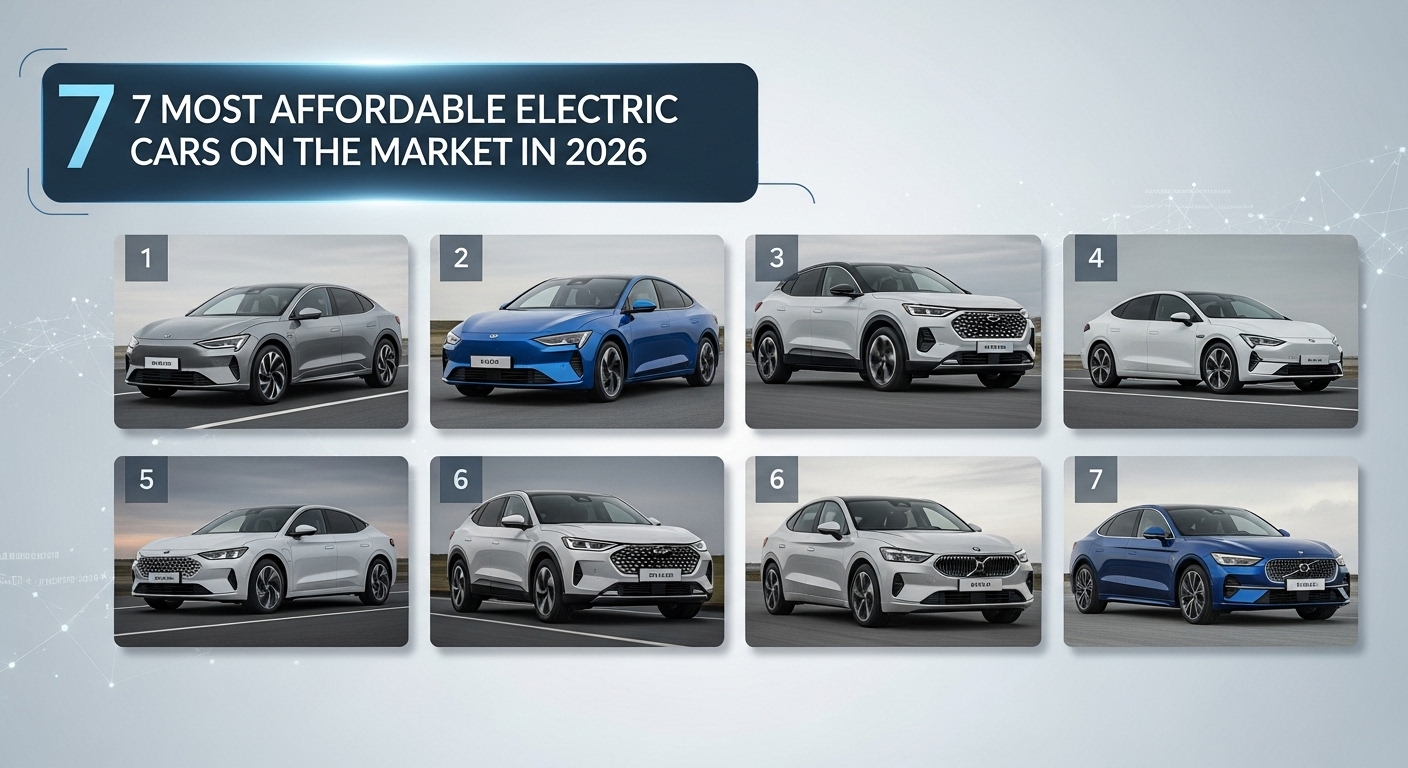
7 Most Affordable Electric Cars on the Market
Here’s a breakdown of the top 7 budget-friendly EVs available today. Prices and features are accurate as of 2026.
1. Nissan Leaf
-
Price: Starting at $27,000
-
Range: 150-226 miles
-
Charging Time: 8 hours (Level 2 charger)
-
Key Features: ProPILOT Assist, e-Pedal, advanced safety features
-
Pros: Reliable, spacious interior, widely available charging network
-
Cons: Modest range compared to newer EVs
The Nissan Leaf has been a pioneer in affordable electric vehicles. It’s perfect for city driving and short commutes while offering excellent reliability.
2. Chevrolet Bolt EV
-
Price: Starting at $28,500
-
Range: 259 miles
-
Charging Time: 10 hours (Level 2 charger)
-
Key Features: 10.2-inch touchscreen, Apple CarPlay/Android Auto, Super Cruise option
-
Pros: Long range, roomy cabin, fun to drive
-
Cons: Limited dealer availability in some regions
The Chevy Bolt EV stands out for its range and performance in the affordable EV segment, making it a solid choice for families.
3. Hyundai Kona Electric
-
Price: Starting at $31,000
-
Range: 258 miles
-
Charging Time: 9 hours (Level 2 charger)
-
Key Features: Heated seats, lane-keeping assist, regenerative braking
-
Pros: Stylish design, strong battery life, compact SUV versatility
-
Cons: Smaller rear seats, slightly higher price than competitors
Hyundai Kona Electric combines practicality with performance. Its SUV design gives extra space without sacrificing efficiency.
4. Kia Niro EV
-
Price: Starting at $32,000
-
Range: 239 miles
-
Charging Time: 9.5 hours (Level 2 charger)
-
Key Features: Smart cruise control, wireless charging, intuitive infotainment
-
Pros: Comfortable ride, efficient, great tech features
-
Cons: Less sporty feel, minimal towing capacity
The Kia Niro EV is perfect for eco-conscious families seeking a versatile crossover with excellent mileage.
5. Mini Electric (Mini Cooper SE)
-
Price: Starting at $29,900
-
Range: 110 miles
-
Charging Time: 4 hours (Level 2 charger)
-
Key Features: Fun-to-drive handling, premium interior, compact size
-
Pros: Stylish design, city-friendly, premium feel
-
Cons: Shorter range, smaller cargo space
The Mini Electric is ideal for city dwellers who value style and agility over long-distance travel.
6. Volkswagen ID.4
-
Price: Starting at $34,000
-
Range: 250 miles
-
Charging Time: 8.5 hours (Level 2 charger)
-
Key Features: Digital cockpit, adaptive cruise control, spacious interior
-
Pros: Roomy, smooth ride, solid safety features
-
Cons: Base model lacks some advanced features
Volkswagen’s ID.4 is a comfortable and practical SUV that’s gaining popularity among budget-conscious EV buyers.
7. Ford Mustang Mach-E (Base Model)
-
Price: Starting at $36,000
-
Range: 230 miles
-
Charging Time: 10 hours (Level 2 charger)
-
Key Features: SYNC 4A system, advanced driver assistance, sporty design
-
Pros: Sporty performance, stylish crossover look, good range
-
Cons: Higher starting price than other budget EVs
For buyers who want a mix of performance and style, the Mustang Mach-E base model offers an exciting entry point into electric SUVs.
Tips for Buying an Affordable Electric Car
-
Check incentives: Look for federal, state, or local EV rebates.
-
Compare charging options: Consider home charging setup vs. public chargers.
-
Think about range: Choose a model that fits your daily commute.
-
Look at total cost of ownership: EVs often save money long-term on fuel and maintenance.
-
Read reviews: Reliability and user experience matter.
Conclusion
Affordable electric cars are no longer limited to tiny city cars. With options ranging from the Nissan Leaf to the Mustang Mach-E, there’s an EV for nearly every budget. By choosing wisely, you can enjoy lower running costs, modern features, and a greener lifestyle—all without breaking the bank.
Take action: Consider your commute, lifestyle, and budget, and explore these 7 affordable EVs. Your wallet—and the planet—will thank you!
FAQ
Q1: Are affordable electric cars reliable?
Yes, many budget EVs like the Nissan Leaf and Chevrolet Bolt have proven reliability and solid warranties.
Q2: How long do affordable EV batteries last?
Most EV batteries last 8–10 years or 100,000–150,000 miles, depending on usage and care.
Q3: Can I charge these EVs at home?
Yes, most EVs can be charged at home using a Level 2 charger or even a standard wall outlet, though slower.
Q4: Are affordable EVs good for long trips?
Some models like the Hyundai Kona Electric and Chevrolet Bolt are suitable for longer trips, but city-focused EVs like the Mini Electric may need frequent charging.
Q5: Do affordable EVs qualify for government incentives?
Yes, many budget EVs are eligible for federal, state, or local incentives, which can reduce the purchase price significantly.