
7 Most Reliable EV Batteries for Long Trips: Maximize Your Electric Car’s Range
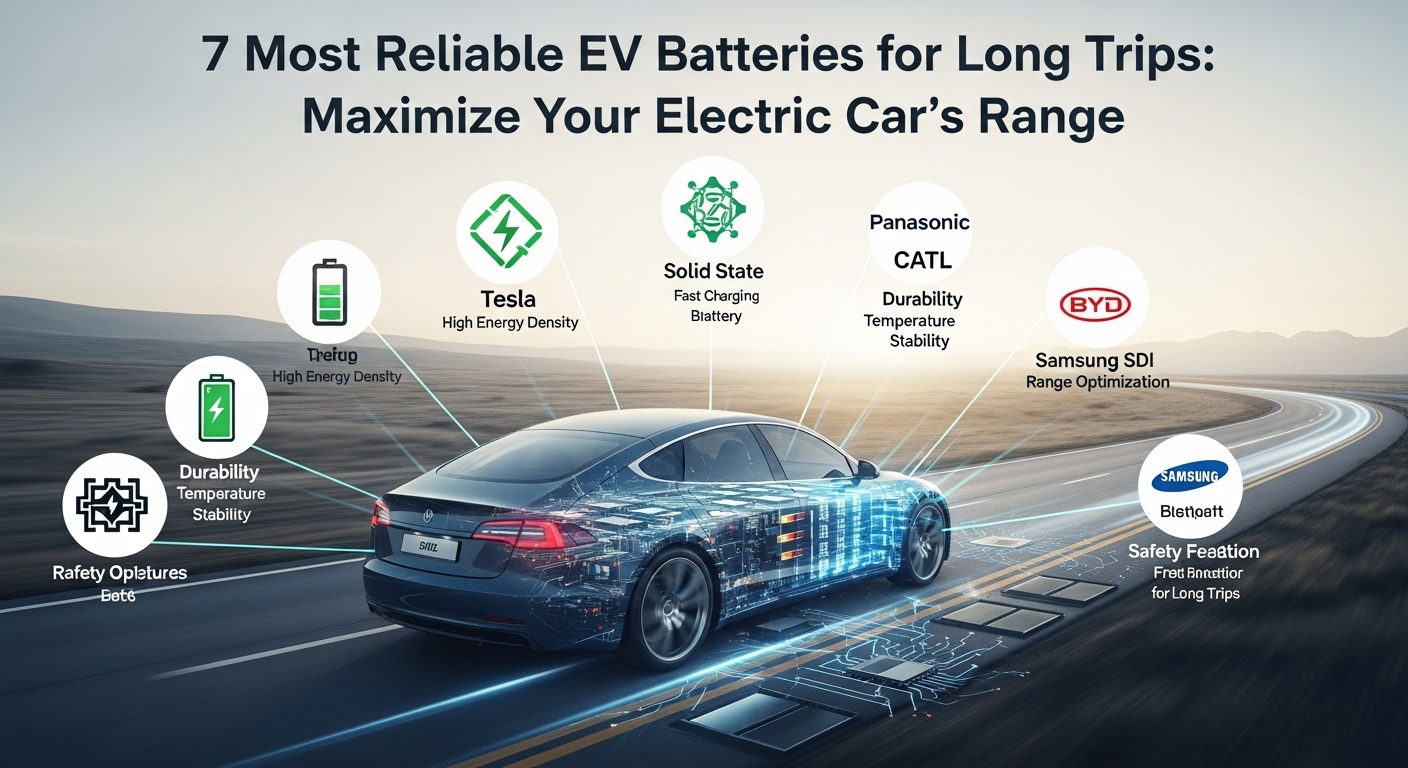
Long road trips in an electric vehicle (EV) can be incredibly exciting—but only if your battery can keep up. Running out of charge miles from a charging station is every EV driver’s nightmare. That’s why choosing a reliable EV battery for long trips is so important.
In this article, we’ll explore seven of the most dependable EV batteries, their advantages, and how they can improve your driving experience. You’ll also get practical tips to maximize battery life and ensure smooth journeys.
Why Choosing the Right EV Battery Matters
Not all EV batteries are created equal. For long-distance travel, the right battery can make a huge difference in comfort, safety, and cost.
Here’s why battery selection is critical:
-
Extended range: High-quality batteries allow longer trips with fewer charging stops.
-
Durability: Good batteries maintain capacity even after thousands of miles.
-
Safety: Reliable batteries are less likely to overheat or fail.
-
Cost efficiency: Fewer replacements and maintenance reduce long-term expenses.
By choosing wisely, you can enjoy worry-free travel while getting the most out of your EV.
7 Most Reliable EV Batteries for Long Trips
1. Lithium-Ion Batteries (High-Density Cells)
Lithium-ion batteries are the most common choice in modern EVs.
Advantages:
-
High energy density for longer range
-
Lightweight design for improved vehicle efficiency
-
Fast charging capabilities
Best for: Drivers who want maximum performance and minimal charging stops during long trips.
Tip: Maintain battery levels between 20%-80% for optimal lifespan.
2. Lithium Iron Phosphate (LFP) Batteries
LFP batteries are known for their safety and long life, making them perfect for long journeys.
Advantages:
-
Extremely stable, reducing the risk of overheating
-
Longer cycle life than traditional lithium-ion batteries
-
Affordable without compromising reliability
Best for: Drivers prioritizing durability and peace of mind over maximum range.
3. Nickel Manganese Cobalt (NMC) Batteries
NMC batteries balance performance, cost, and lifespan.
Advantages:
-
High energy density suitable for long drives
-
Excellent thermal stability for hot climates
-
Lightweight, making them ideal for SUVs and larger EVs
Best for: Long trips where a balance of power, safety, and efficiency is needed.
4. Solid-State Batteries
Solid-state batteries are an emerging technology with impressive potential.
Advantages:
-
Higher energy density than traditional lithium-ion
-
Safer with a lower risk of overheating or fire
-
Faster charging capabilities
Best for: Early adopters and tech-savvy EV owners seeking advanced performance for long-distance travel.
5. Tesla 4680 Battery Cells
Tesla’s proprietary 4680 battery cells are designed to enhance both range and durability.
Advantages:
-
Improved driving range
-
Structural integrity for vehicle safety
-
Efficient thermal management
Best for: Tesla owners wanting maximum reliability and long-range performance.
6. Blade Batteries (BYD Technology)
BYD’s Blade batteries offer a unique design focused on safety and longevity.
Advantages:
-
Highly resistant to thermal runaway
-
Long-lasting performance over thousands of charge cycles
-
Compact design saves space without sacrificing capacity
Best for: Drivers who value safety and consistent performance on long trips.
7. Lithium Titanate (LTO) Batteries
LTO batteries are ultra-durable and fast-charging, ideal for demanding travel.
Advantages:
-
Rapid charging in under 10 minutes
-
Excellent performance in extreme temperatures
-
Very long lifespan, often exceeding 20,000 cycles
Best for: Adventurous drivers traveling in diverse climates and terrains.

Tips for Maximizing EV Battery Life on Long Trips
To ensure your EV battery performs optimally during long drives:
-
Plan charging stops in advance using reliable EV charging apps.
-
Avoid excessive fast charging unless necessary, as it can degrade battery life over time.
-
Drive at steady speeds; avoid rapid acceleration or braking.
-
Keep software updated, as battery management systems are often improved via updates.
-
Maintain ideal battery levels—typically between 20%-80% for daily use.
Following these tips can significantly improve your battery’s lifespan and ensure worry-free travel.
Conclusion
Selecting the right EV battery is key to enjoying long-distance trips with confidence. From Lithium-Ion and NMC batteries to advanced Solid-State, Blade, and LTO technologies, each type offers unique advantages.
By understanding your options and practicing smart battery management, you can maximize range, safety, and durability. Whether you’re a daily commuter or a road-trip enthusiast, a reliable EV battery will make your journey smooth, efficient, and stress-free.
FAQ
Q1: Which EV battery type is best for long-distance travel?
A1: Lithium-ion and NMC batteries are the most reliable for long trips due to high energy density and consistent performance.
Q2: How can I extend my EV battery’s lifespan?
A2: Avoid frequent fast charging, drive steadily, and keep battery levels between 20%-80% for daily use.
Q3: Are solid-state batteries available now?
A3: They are emerging in select EV models but are expected to become mainstream in the next few years.
Q4: Can extreme temperatures damage EV batteries?
A4: Yes, both high and low temperatures can affect battery efficiency, but LFP and LTO batteries are more resilient.
Q5: Do Tesla 4680 batteries require special maintenance?
A5: No, they follow standard EV maintenance but offer improved durability and range compared to older Tesla cells.