EV Market Growth Forecast Through 2030: Trends, Opportunities, and What Investors Should Know

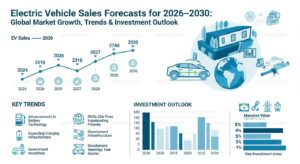
Expanding charging networks are a key driver of EV market growth worldwide.
The global shift toward electric mobility is no longer a future prediction — it is happening right now. Governments are tightening emissions regulations, battery technology is improving, and consumers are becoming more environmentally conscious. As a result, the electric vehicle (EV) industry is entering a period of accelerated expansion.
We explore the EV market growth forecast through 2030, the key drivers behind this expansion, potential risks, and where the most promising investment opportunities may lie. Whether you are an investor, entrepreneur, or simply curious about the future of transportation, this guide provides a clear and trustworthy overview based on current industry trends.
Global EV Market Overview
The electric vehicle industry has experienced consistent year-over-year growth over the past decade. What was once a niche market is now a major segment of the automotive industry.
Several factors are fueling this transformation:
-
Stricter government emission regulations
-
Falling lithium-ion battery costs
-
Expansion of EV charging infrastructure
-
Growing consumer demand for sustainable transportation
-
Corporate fleet electrification
By 2030, many analysts expect electric vehicles to represent a significant percentage of new car sales globally. The pace of adoption varies by region, but the overall direction is clear: electrification is accelerating.
EV Market Growth Forecast Through 2030
Projected Market Size
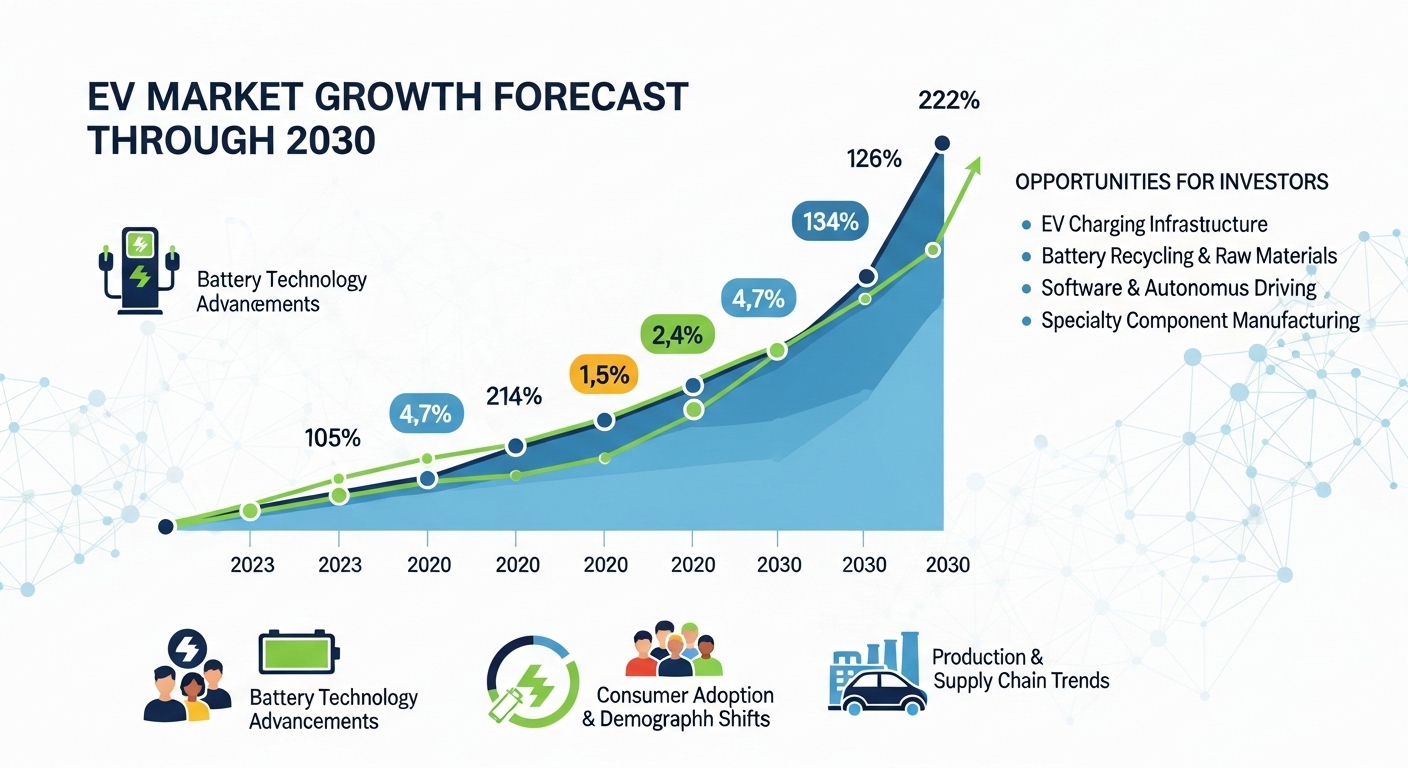
Industry forecasts suggest that the global EV market could more than triple by 2030 compared to early 2020 levels. Some projections estimate:
-
EVs could account for 30% to 50% of global new vehicle sales by 2030.
-
The total market value may exceed several trillion dollars.
-
Battery demand could increase fourfold or more.
These projections are supported by policy commitments from major economies and increased private-sector investment in EV technology and infrastructure.
Key Drivers Behind EV Market Expansion
1. Government Incentives and Regulations
Many governments offer:
-
EV tax credits
-
Purchase subsidies
-
Reduced registration fees
-
Access to carpool lanes
-
Zero-emission vehicle mandates
Policies aimed at reducing carbon emissions play a crucial role in shaping the electric vehicle adoption forecast. Countries with strong regulatory frameworks typically see faster market penetration.
2. Falling Battery Costs
Battery cost reduction remains one of the most important factors influencing EV affordability.
Over the past decade:
-
Lithium-ion battery prices have dropped dramatically.
-
Manufacturing efficiency has improved.
-
Energy density has increased, extending vehicle range.
Lower battery costs directly impact EV pricing, making electric cars more competitive with traditional internal combustion vehicles.
3. Expansion of EV Charging Infrastructure
The growth of EV charging infrastructure is essential for mass adoption.
Key developments include:
-
Public fast-charging networks
-
Home charging installation services
-
Smart grid integration
-
Workplace charging stations
As charging becomes more accessible and reliable, consumer confidence in electric vehicles increases.
Emerging Opportunities in the EV Ecosystem
The EV market is more than just car manufacturing. Several high-growth segments are attracting attention.
Battery Technology Investment
Innovations such as solid-state batteries and advanced lithium chemistries could reshape the industry. Investors interested in long-term trends often explore:
-
EV battery manufacturing stocks
-
Battery recycling companies
-
Energy storage startups
EV Charging Network Stocks
As the number of EVs on the road grows, so does the demand for charging infrastructure. Companies focused on:
-
Fast charging stations
-
Smart charging software
-
Grid integration solutions
are positioned for long-term expansion.
Electric Commercial Vehicles
Commercial fleets are increasingly electrifying to reduce fuel costs and meet sustainability goals. This includes:
-
Electric delivery vans
-
Electric buses
-
Electric trucks
Fleet electrification presents strong business-to-business opportunities and predictable demand.
Regional Outlook: Where Growth Is Strongest
North America
Government incentives and expanding charging infrastructure are supporting steady growth. Corporate fleet adoption is also accelerating.
Europe
Strict emission standards and climate goals are pushing rapid EV adoption. Several countries plan to phase out internal combustion vehicle sales in the coming decade.
Asia-Pacific
This region represents one of the fastest-growing EV markets. Large populations, urbanization, and government support contribute to significant expansion potential.
Challenges That Could Impact the Forecast
Despite strong growth projections, the EV market faces real challenges:
-
Supply chain constraints for critical minerals
-
Battery raw material price volatility
-
Grid capacity limitations
-
Consumer concerns about resale value
-
Economic slowdowns affecting vehicle purchases
Addressing these issues will be essential for sustaining projected growth through 2030.
Long-Term Investment Considerations
When evaluating the EV market growth forecast through 2030, investors often consider:
-
Regulatory stability in key markets
-
Advances in battery energy density
-
Charging infrastructure expansion rates
-
Raw material supply diversification
-
Total cost of ownership comparisons
Rather than focusing on short-term trends, long-term investors typically assess structural changes in the transportation sector.
Why EV Market Growth Matters Beyond Cars
The impact of EV adoption extends beyond the automotive industry. It influences:
-
Renewable energy integration
-
Power grid modernization
-
Urban planning
-
Climate policy targets
-
Energy security strategies
Electric vehicles are part of a broader clean energy transition, connecting transportation with electricity markets and sustainability goals.
What the EV Market Could Look Like in 2030
By the end of the decade, we may see:
-
EVs reaching price parity with gasoline vehicles in many markets
-
Expanded ultra-fast charging corridors
-
Improved battery recycling infrastructure
-
Greater integration between vehicles and renewable energy systems
-
Increased competition among manufacturers
If current momentum continues, electric vehicles may transition from being an alternative option to the default choice for many consumers.
Conclusion
The EV market growth forecast through 2030 points toward sustained expansion driven by technology improvements, regulatory support, and shifting consumer preferences. While challenges remain, the long-term trajectory suggests that electrification will play a central role in the future of transportation.
For investors and business leaders, understanding the broader ecosystem — from battery innovation to charging infrastructure — is essential. For consumers, improved affordability and convenience may make electric vehicles a practical choice sooner than expected.
What are your thoughts on the future of electric mobility? Do you believe EV adoption will accelerate faster than expected, or face unexpected hurdles? Share your perspective and join the discussion.
FAQ: EV Market Growth Forecast Through 2030
1. How fast is the EV market expected to grow by 2030?
Many forecasts suggest electric vehicles could account for 30% to 50% of global new car sales by 2030, depending on region and policy support.
2. What is driving EV market growth?
Key drivers include government incentives, falling battery costs, expanding charging infrastructure, and growing environmental awareness.
3. Are EV batteries becoming cheaper?
Yes. Lithium-ion battery costs have declined significantly over the past decade, helping reduce overall EV prices.
4. Is EV charging infrastructure expanding quickly?
Charging networks are growing rapidly worldwide, including public fast chargers and home installation solutions.
5. Is the EV market a good long-term investment opportunity?
Many analysts see long-term potential in EV manufacturing, battery technology, and charging infrastructure, though risks remain and careful research is essential.