
Comparing Wire Insulation Grades – PVC vs XLPE vs LSZH: Which One Should You Choose?
When it comes to electrical wiring, the type of insulation used on cables can make a significant difference in safety, performance, and longevity. With so many options available, choosing the right wire insulation can be confusing. In this article, we’ll compare three popular insulation grades – PVC, XLPE, and LSZH – to help you make an informed decision. Whether you are wiring a home, office, or industrial facility, understanding these differences is essential for efficiency and safety.
What is Wire Insulation?
Wire insulation is the protective layer covering electrical conductors. Its main purpose is to prevent electrical shocks, short circuits, and fire hazards. Different materials have unique properties that affect their heat resistance, flexibility, durability, and environmental impact.
Choosing the right insulation ensures not only safety but also long-term cost savings by reducing maintenance and replacement needs.
PVC Wire Insulation
What is PVC?
Polyvinyl Chloride (PVC) is one of the most commonly used insulation materials. It is affordable, versatile, and widely available, making it a favorite for residential and commercial wiring.
Key Features of PVC
-
Durability: Resistant to abrasion and wear.
-
Flexibility: Easy to install and bend around corners.
-
Cost-Effective: Lower price compared to XLPE and LSZH.
-
Flame Retardant: Self-extinguishing in case of fire.
Ideal Applications
-
Household wiring
-
Office and commercial buildings
-
General-purpose electrical projects
Limitations
-
Lower temperature tolerance (up to 70°C for standard PVC).
-
Produces toxic fumes when burned.
XLPE Wire Insulation
What is XLPE?
Cross-Linked Polyethylene (XLPE) is a high-performance insulation material used in industrial and high-voltage applications. Cross-linking improves the thermal and mechanical properties of standard polyethylene.
Key Features of XLPE
-
High Temperature Resistance: Can withstand up to 90–250°C depending on the grade.
-
Excellent Chemical Resistance: Resistant to oils, solvents, and water.
-
Durability: Less prone to cracking and aging over time.
-
Electrical Efficiency: Low dielectric loss, making it suitable for high-voltage systems.
Ideal Applications
-
Industrial wiring
-
Power distribution networks
-
Underground and outdoor cables
Limitations
-
Higher cost compared to PVC
-
Slightly less flexible than PVC, making installation more challenging
LSZH Wire Insulation
What is LSZH?
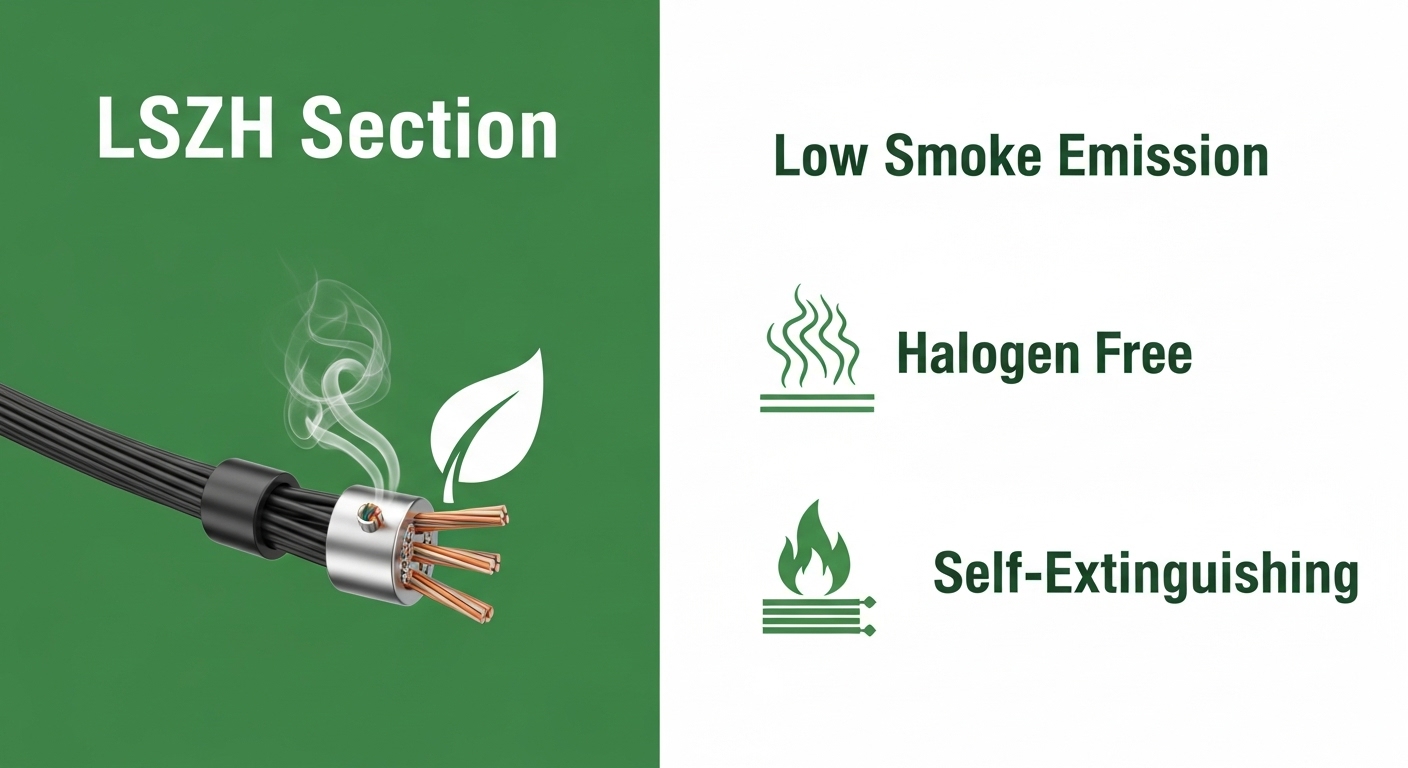
Low Smoke Zero Halogen (LSZH) insulation is designed to minimize toxic smoke and corrosive gases in the event of a fire. It is increasingly popular in areas where human safety and environmental protection are a priority.

Key Features of LSZH
-
Low Smoke Emission: Reduces inhalation hazards during fire.
-
Zero Halogen: Does not release corrosive gases, protecting electronics.
-
Moderate Flexibility: Suitable for most installations.
-
Safe for Enclosed Spaces: Ideal for tunnels, aircraft, and offices.
Ideal Applications
-
Public buildings and transport systems
-
Data centers and server rooms
-
Hospitals and airports
Limitations
-
Higher cost than PVC
-
Slightly lower thermal performance compared to XLPE
PVC vs XLPE vs LSZH: Side-by-Side Comparison
| Feature | PVC | XLPE | LSZH |
|---|---|---|---|
| Temperature Tolerance | 70°C | 90–250°C | 90–120°C |
| Flexibility | High | Medium | Medium |
| Durability | Moderate | High | Moderate |
| Flame Resistance | Self-extinguishing | Excellent | Excellent |
| Smoke & Toxic Fumes | High | Low | Very Low |
| Cost | Low | High | Medium |
| Best Use | Residential & general use | Industrial & high-voltage | Safety-critical environments |
Tips for Choosing the Right Insulation
-
Consider the Environment:
-
Use LSZH in enclosed spaces or high-traffic areas.
-
Use XLPE for outdoor, high-temperature, or high-voltage applications.
-
Use PVC for everyday indoor wiring.
-
-
Factor in Cost vs Safety:
-
PVC is budget-friendly but less safe in fire scenarios.
-
LSZH offers maximum safety with moderate cost.
-
XLPE is premium but ideal for heavy-duty performance.
-
-
Check Regulatory Requirements:
-
Some buildings require fire-safe and low-smoke insulation.
-
Industrial standards may specify XLPE for high-voltage circuits.
-
-
Think Long-Term:
-
Investing in high-quality insulation reduces maintenance and replacement costs over time.
-
Conclusion
Choosing the right wire insulation is not just about cost; it’s about safety, efficiency, and performance. PVC is excellent for general-purpose wiring, XLPE shines in industrial and high-temperature applications, and LSZH ensures maximum safety in sensitive or enclosed areas. Understanding the differences can save money, prevent hazards, and extend the lifespan of your electrical systems.
Always consider the application, environment, and regulatory requirements before making a decision. By selecting the right insulation, you protect both people and property while ensuring reliable electrical performance.
FAQ
1. What is the safest wire insulation material?
LSZH is the safest due to its low smoke and zero halogen properties, reducing risks in case of fire.
2. Can I use PVC wires outdoors?
PVC is less heat- and UV-resistant, so it’s better for indoor use. For outdoor or high-temperature applications, XLPE is preferred.
3. Is XLPE better than PVC?
Yes, XLPE offers higher temperature tolerance, chemical resistance, and durability, but it is more expensive and slightly less flexible.
4. Why is LSZH important in public buildings?
LSZH minimizes toxic smoke and corrosive gases during fires, protecting people and sensitive equipment.
5. How do I choose between XLPE and LSZH?
Choose XLPE for performance and high-voltage use; choose LSZH for safety-critical environments where smoke and toxicity must be minimized.