
Introduction
Are electric cars really cheaper than gas cars in 2026? Or is the upfront price still too high to justify the switch?
With rising fuel prices, changing government incentives, and fast improvements in battery technology, many drivers are asking the same question: Which is more cost-effective in the long run — an electric car or a gasoline vehicle?
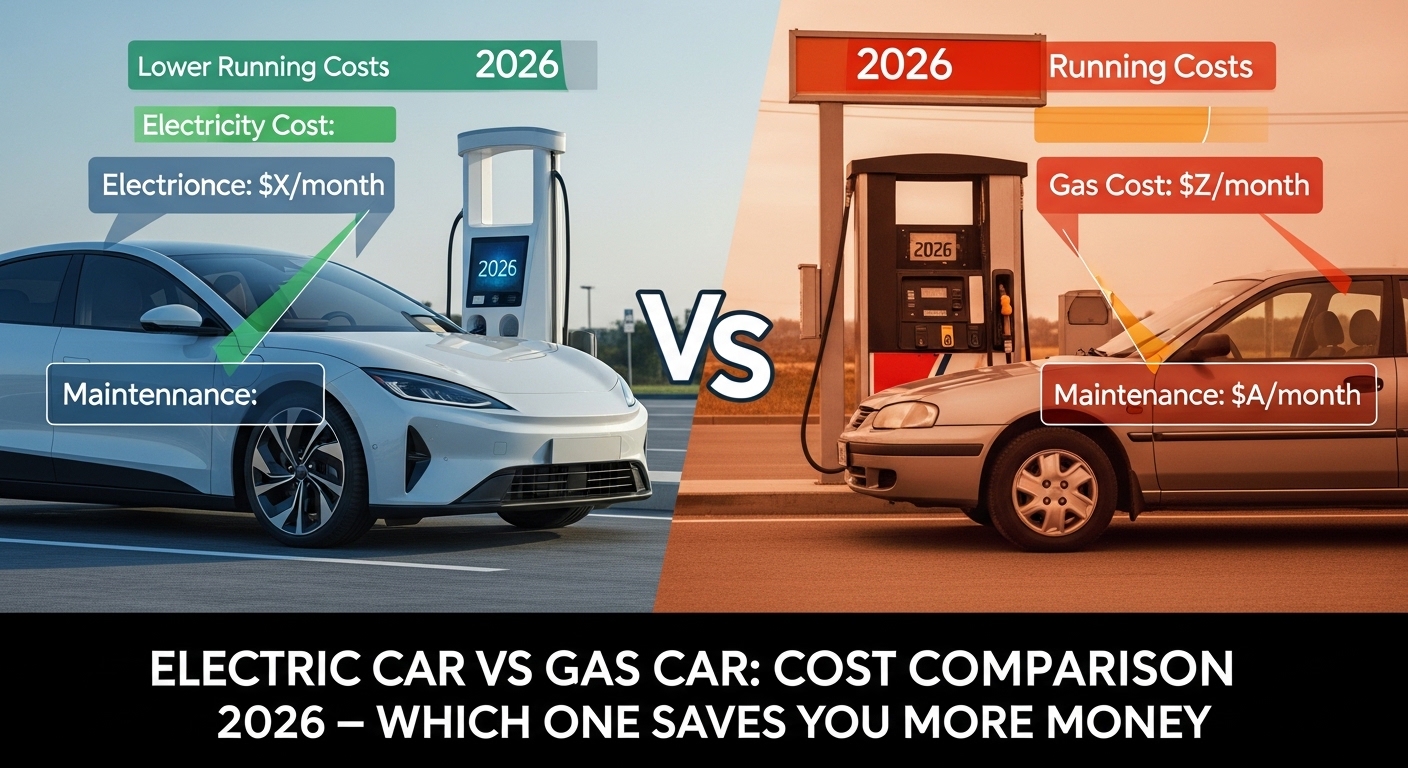
In this detailed guide, we break down the true cost comparison between electric cars and gas cars in 2026, including purchase price, fuel or charging costs, maintenance, insurance, tax credits, and resale value. By the end, you’ll have a clear understanding of which option makes better financial sense for your lifestyle and budget.
Electric Car vs Gas Car: Upfront Purchase Cost
Average Vehicle Price in 2026
In 2026, electric vehicles (EVs) are more affordable than ever, but they still tend to have a higher sticker price compared to traditional gasoline cars.
-
Electric car average price (2026): $38,000–$55,000
-
Gas car average price (2026): $25,000–$40,000
The main reason for the difference is battery cost. However, the gap is narrowing every year due to increased production and competition.
Government Incentives and Tax Credits
Many countries still offer:
-
EV tax credits
-
State or regional rebates
-
Charging equipment rebates
-
Reduced registration fees
These incentives can reduce the effective price of an electric vehicle by $3,000 to $7,500 or more, depending on your location.
If you qualify for incentives, the electric vehicle total cost of ownership becomes much more competitive.
Fuel vs Charging Costs in 2026
One of the biggest differences in the electric car vs gas car cost comparison is energy cost.
Gasoline Costs
Gas prices remain unpredictable in 2026. On average:
-
Annual fuel cost for gas cars: $1,500–$2,500
-
Based on 12,000–15,000 miles per year
High fuel consumption vehicles cost even more.
Home Charging Costs
Electric vehicles are much cheaper to “fuel”:
-
Average annual home charging cost: $500–$900
-
Based on residential electricity rates
If you install a home EV charging station, you can charge overnight at lower electricity rates, which reduces costs even further.
Public Fast Charging
Public fast chargers are more expensive than home charging but still often cheaper than gasoline. Many drivers use a mix of:
-
70–80% home charging
-
20–30% public charging
Over time, the savings add up significantly.
Estimated 5-year savings on energy:
Electric cars can save $5,000–$8,000 compared to gasoline vehicles.
Maintenance Costs: EV vs Gas Car
Maintenance is where electric vehicles often shine.
Why Electric Cars Cost Less to Maintain
Electric cars have:
-
No oil changes
-
No spark plugs
-
No transmission fluid changes
-
Fewer moving parts
Typical EV maintenance includes:
-
Tire rotation
-
Brake fluid checks
-
Cabin air filter replacement
Gas Car Maintenance Costs
Gas vehicles require:
-
Oil changes every 5,000–7,500 miles
-
Engine repairs
-
Transmission servicing
-
Exhaust system repairs
Average annual maintenance costs:
-
Electric car: $300–$600
-
Gas car: $800–$1,500
Over 5–10 years, the difference becomes significant.
Insurance Costs in 2026
Insurance for electric vehicles can be slightly higher due to battery replacement costs and advanced technology.
Average Insurance Comparison
-
Electric car insurance: 5–15% higher in some regions
-
Gas car insurance: Typically lower upfront
However, insurance companies are adjusting to EV adoption, and rates are becoming more competitive.
If you’re searching for low cost electric car insurance 2026, comparing quotes is essential.
Battery Replacement Costs
One common concern is battery replacement.
In 2026:
-
Most EV batteries last 8–15 years
-
Many manufacturers offer long battery warranties
Battery replacement cost (if needed outside warranty):
-
$5,000–$12,000
However, battery prices continue to fall each year. For most drivers, battery replacement is not needed during early ownership years.
Depreciation and Resale Value
Electric Vehicle Resale Value
Earlier EV models depreciated quickly. In 2026, the situation has improved due to:
-
Higher demand
-
Improved battery durability
-
Expanding charging infrastructure
Some electric cars now hold value similarly to gas vehicles.
Gas Vehicle Depreciation
Gas cars still depreciate steadily, especially with increasing fuel costs and stricter emissions regulations.
In regions pushing toward clean energy, gasoline vehicles may lose value faster over time.
Long-Term Total Cost of Ownership (5-Year Comparison)
Here’s a simplified 5-year cost breakdown example:
Electric Car (Estimated)
-
Purchase price (after incentives): $35,000
-
Charging costs: $3,500
-
Maintenance: $2,000
-
Insurance: $7,000
-
Total: $47,500
Gas Car (Estimated)
-
Purchase price: $28,000
-
Fuel costs: $10,000
-
Maintenance: $5,000
-
Insurance: $6,000
-
Total: $49,000
While exact numbers vary, the electric car total cost of ownership can be lower over five years — especially if fuel prices rise.
Charging Infrastructure in 2026
One factor affecting cost and convenience is charging availability.
In 2026:
-
Public charging networks have expanded significantly
-
More workplaces offer EV charging
-
Apartment complexes increasingly install chargers
Installing a home electric vehicle charging station remains the most cost-effective solution for daily use.
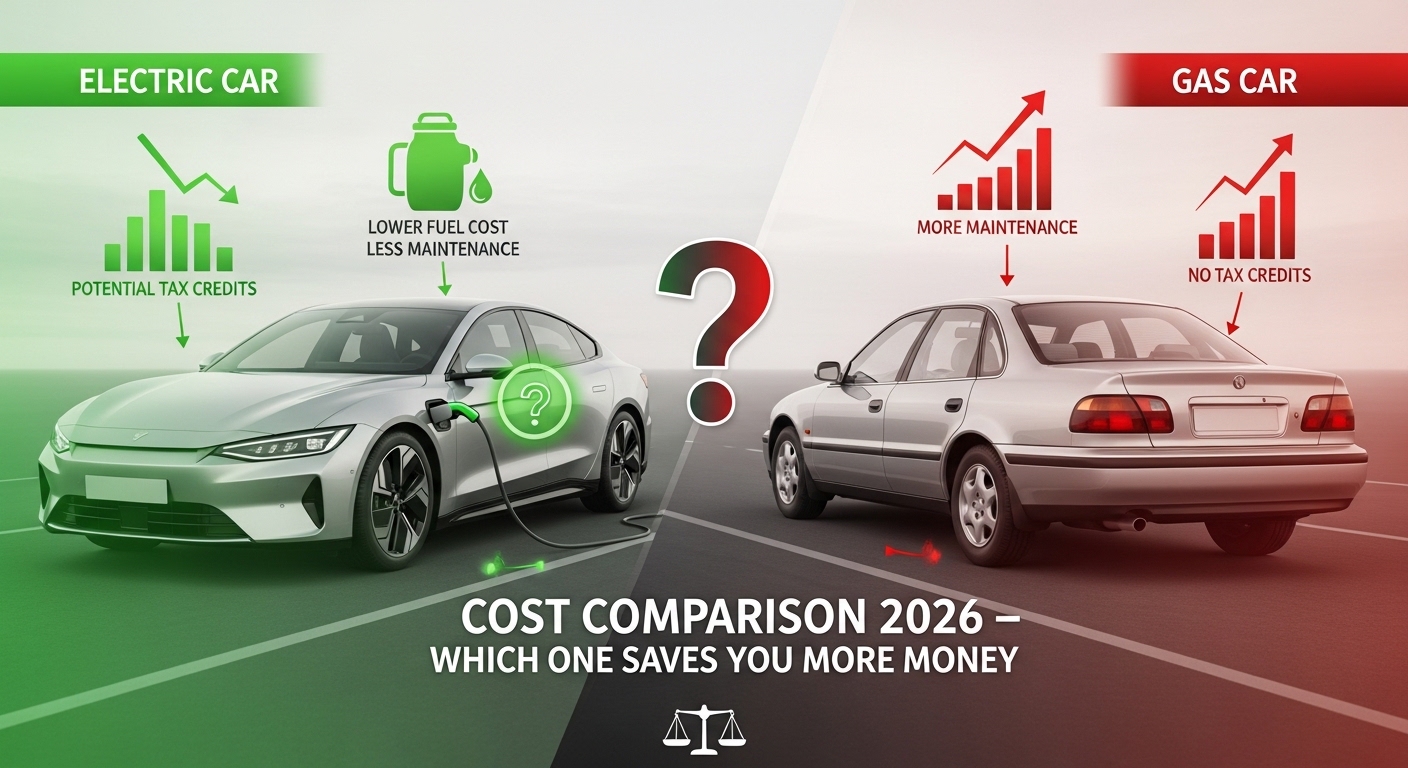
Environmental and Indirect Financial Benefits
Beyond direct costs, electric cars offer indirect savings:
-
Potential tax benefits
-
Lower emissions fees in some cities
-
Access to carpool lanes in certain regions
-
Reduced environmental impact
Some cities charge congestion fees for gas vehicles but offer discounts for EVs.
Who Saves More with an Electric Car?
An electric car makes the most financial sense if:
-
You drive more than 10,000 miles per year
-
You can charge at home
-
You qualify for EV tax credits
-
Fuel prices in your area are high
A gas car may still make sense if:
-
You drive very little annually
-
Electricity rates are extremely high
-
You do not qualify for incentives
-
You need a very low upfront purchase price
Electric Car vs Gas Car: Final Verdict for 2026
So, which one is cheaper in 2026?
In many cases, electric cars are now financially competitive or even cheaper over five years, especially when factoring in fuel savings and lower maintenance.
However, the best choice depends on:
-
Your driving habits
-
Local electricity and fuel prices
-
Incentive availability
-
Budget flexibility
The cost gap continues to shrink every year. For many households, 2026 may finally be the tipping point where going electric makes both environmental and financial sense.
Conclusion
The electric car vs gas car cost comparison in 2026 shows a clear trend: while electric vehicles may still cost more upfront, they often save money over time through lower charging and maintenance expenses.
If you’re planning to buy a new vehicle this year, take the time to calculate your personal total cost of ownership. Compare local fuel prices, electricity rates, tax incentives, and insurance quotes.
Have you considered switching to electric? Share your thoughts or questions in the comments — your experience could help other readers make a smart decision.
FAQ: Electric Car vs Gas Car Cost Comparison 2026
1. Are electric cars cheaper than gas cars in 2026?
Over the long term, electric cars can be cheaper due to lower fuel and maintenance costs, especially if you qualify for incentives.
2. How much can I save on fuel with an electric car?
Many drivers save between $1,000 and $2,000 per year on fuel compared to gasoline vehicles.
3. Is EV maintenance really cheaper?
Yes. Electric vehicles have fewer moving parts and do not require oil changes, which reduces maintenance expenses.
4. What is the biggest cost of owning an electric car?
The upfront purchase price is usually the highest cost, though incentives can reduce it significantly.
5. Will gas cars become more expensive to own in the future?
In some regions, rising fuel prices and environmental regulations may increase the long-term cost of owning gasoline vehicles.