
Introduction: Choosing the Smarter, Cheaper Drive
With fuel prices rising and eco-friendly vehicles becoming more popular, many drivers are asking the same big question: Electric cars vs hybrids— which saves more money?
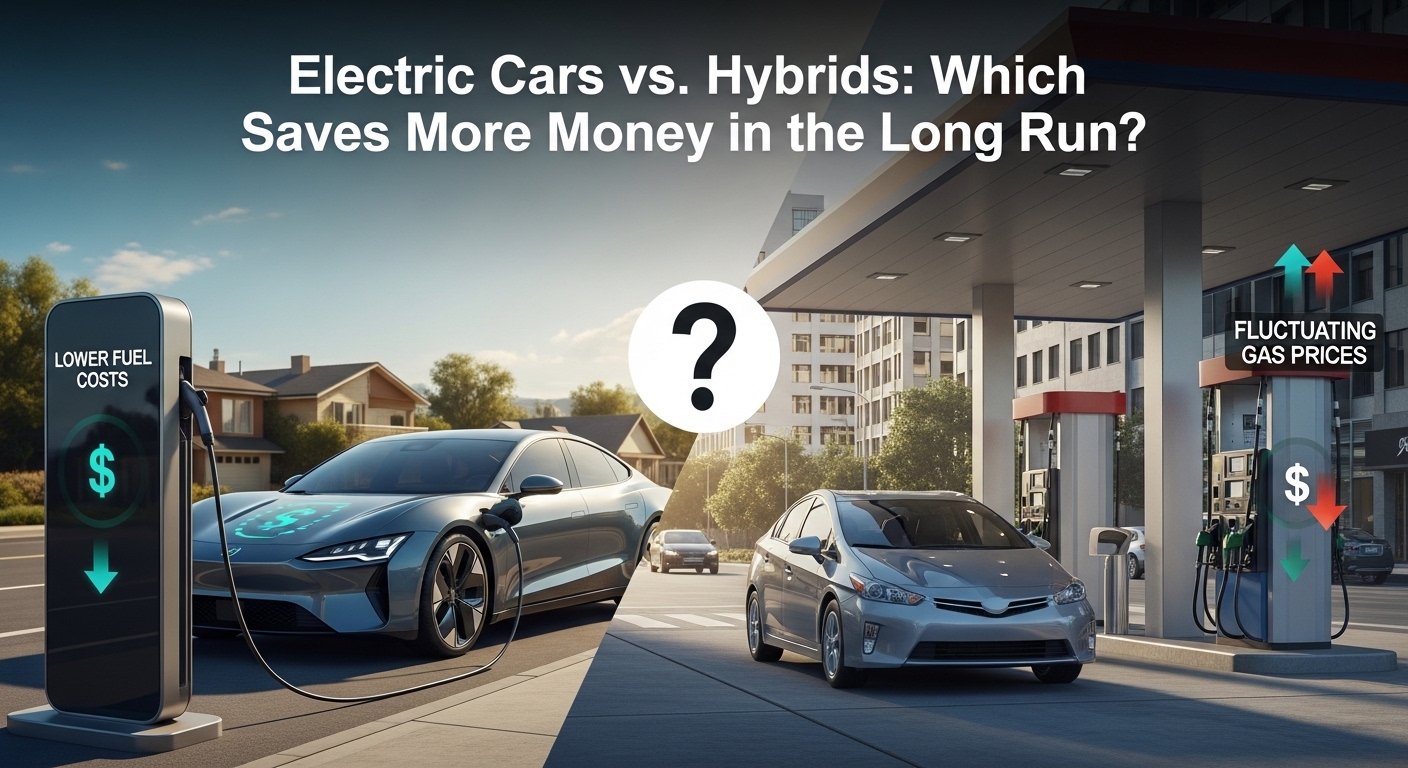
Both options promise lower running costs compared to traditional gasoline cars, but the real savings depend on more than just fuel. Purchase price, maintenance, charging or fueling costs, and long-term ownership all play a role.
In this guide, we’ll break everything down in a clear, honest, and practical way—so you can decide which option makes the most financial sense for your lifestyle and budget.
Understanding the Basics
What Is an Electric Car?
An electric car (EV) runs entirely on electricity stored in a battery. It has no gasoline engine and produces zero tailpipe emissions.
Key features:
-
Powered only by electricity
-
Charged at home or public charging stations
-
Fewer moving parts than fuel-powered cars
What Is a Hybrid Car?
A hybrid car combines a gasoline engine with an electric motor. It switches between the two to improve fuel efficiency.
Key features:
-
Uses both fuel and electricity
-
No need for external charging (in most cases)
-
Better fuel economy than standard cars
Upfront Cost Comparison
Electric Cars: Higher Price, Long-Term Value
Electric vehicles often have a higher purchase price, mainly due to battery technology. However, prices are gradually decreasing as technology improves.
Typical cost factors:
-
Higher initial cost
-
Lower running expenses
-
Strong resale value in some markets
Hybrids: More Affordable Entry Point
Hybrids usually cost less upfront, making them attractive for buyers with limited budgets.
Why hybrids cost less initially:
-
Smaller battery systems
-
Existing gasoline engine technology
-
More models available in lower price ranges
Winner for upfront cost: Hybrids
Fuel and Energy Costs: Where the Real Savings Begin
Cost to Drive an Electric Car
Charging an electric car is generally much cheaper than buying gasoline, especially if you charge at home during off-peak hours.
Average benefits:
-
Lower cost per mile
-
Stable electricity prices
-
No fuel price shocks
Hybrid Fuel Savings
Hybrids reduce fuel use significantly, especially in city driving, but they still rely on gasoline.
Limitations:
-
Fuel prices fluctuate
-
Less savings on highways
-
Still affected by inflation
Winner for daily energy costs: Electric Cars
Maintenance and Repair Costs
Electric Cars: Fewer Parts, Fewer Problems
Electric vehicles have:
-
No oil changes
-
No exhaust system
-
No transmission issues
This results in lower maintenance costs over time.
Hybrids: More Complex Systems
Hybrids contain both:
-
A fuel engine
-
An electric motor
That means more parts that may need servicing.
Winner for maintenance savings: Electric Cars
Insurance and Ownership Costs
Insurance for Electric Cars
Electric cars may have:
-
Slightly higher insurance premiums
-
Higher repair costs due to advanced tech
However, these costs are slowly decreasing as EVs become more common.
Insurance for Hybrids
Hybrids often:
-
Cost less to insure
-
Use more familiar repair technology
Winner for insurance costs: Hybrids
Charging vs Fuel Convenience
Electric Car Charging
Pros:
-
Charge at home overnight
-
No gas station visits
-
Lower long-term cost
Cons:
-
Charging station availability varies
-
Longer refueling time on road trips
Hybrid Refueling
Pros:
-
Fuel available everywhere
-
No charging anxiety
Cons:
-
Frequent fuel stops
-
Ongoing gasoline costs
Winner for convenience: Hybrids
Winner for cost efficiency: Electric Cars
Long-Term Ownership Costs
When looking at total cost of ownership, electric cars often come out ahead after several years.
Why Electric Cars Win Long-Term
-
Lower fuel costs
-
Minimal maintenance
-
Better efficiency per mile
When Hybrids Make More Sense
-
Short ownership period
-
Limited access to charging
-
Mixed city and highway driving
Winner over 5–10 years: Electric Cars
Environmental Impact (Bonus Savings)
While this article focuses on money, it’s worth noting:
-
Electric cars produce zero direct emissions
-
Hybrids reduce fuel use but still emit CO₂
In some regions, eco-friendly choices may lead to lower fees, toll discounts, or future incentives, adding indirect savings.
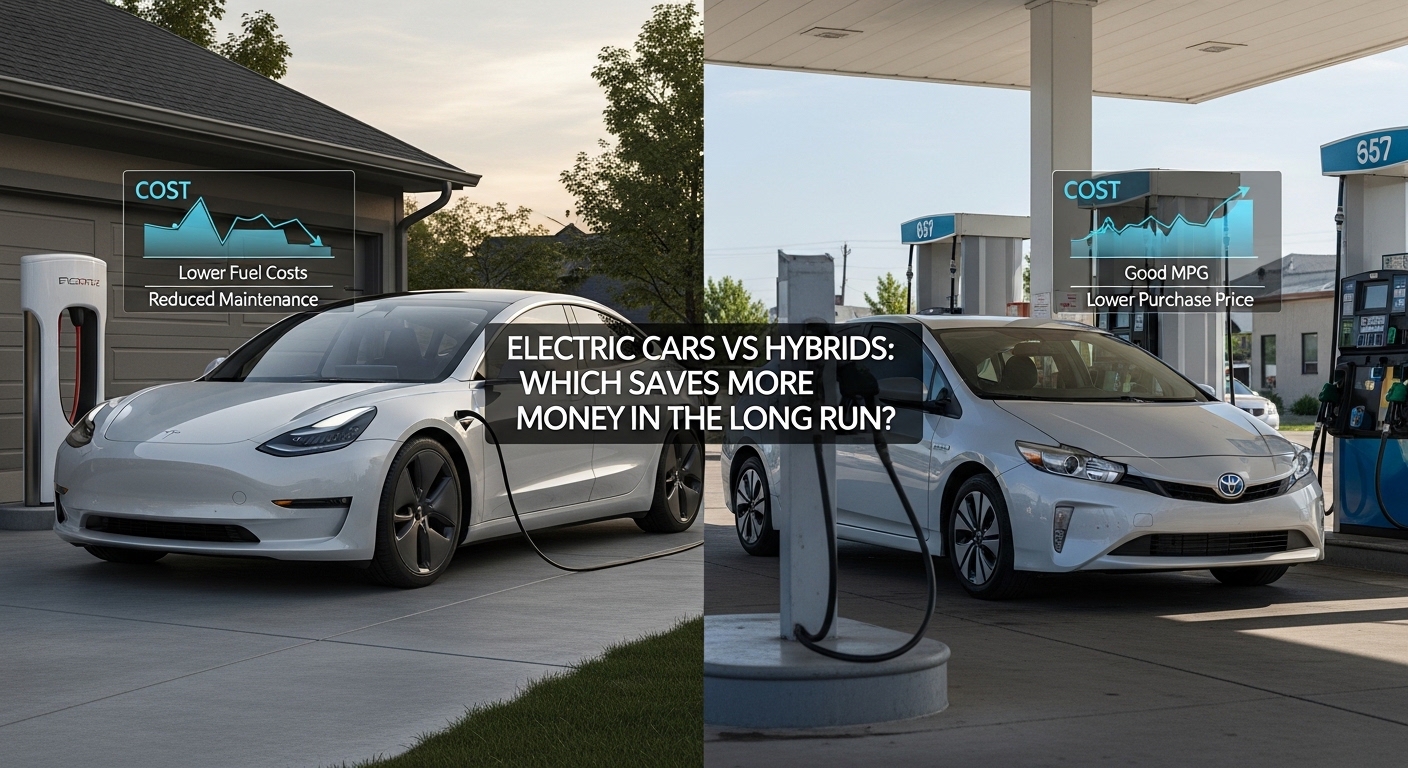
Electric Cars vs Hybrids: Quick Comparison Table
Electric Cars
-
Lower fuel cost
-
Lower maintenance
-
Higher upfront price
-
Best for long-term savings
Hybrid Cars
-
Lower purchase cost
-
Better fueling convenience
-
Moderate fuel savings
-
Ideal for short-term ownership
Final Verdict: Which Saves More Money?
So, electric cars vs hybrids— which saves more money?
-
Choose an electric car if:
-
You plan to keep the vehicle long-term
-
You can charge at home
-
You want the lowest running costs
-
-
Choose a hybrid if:
-
You want a lower upfront cost
-
You drive long distances often
-
Charging access is limited
-
Both options can save money compared to traditional cars—but electric cars usually win in total long-term savings.
Conclusion: Make the Smart Financial Move
Choosing between an electric car and a hybrid isn’t just about technology—it’s about how you drive, where you live, and how long you plan to own the vehicle.
If your goal is maximum savings over time, electric cars are hard to beat. If you prefer flexibility and a lower starting price, hybrids still offer solid value.
FAQ: Electric Cars vs Hybrids
1. Are electric cars cheaper to run than hybrids?
Yes. Electric cars usually have lower fuel and maintenance costs over time.
2. Do hybrids save money compared to gasoline cars?
Yes. Hybrids use less fuel and are more efficient, especially in city driving.
3. Is an electric car worth it without home charging?
It depends. Public charging works, but home charging offers the biggest savings.
4. Which is better for long-term ownership?
Electric cars typically offer better long-term cost savings.
5. Are electric car batteries expensive to replace?
Battery costs are decreasing, and many last for many years with minimal issues.