
Electrical Grades Explained: What Each Wire Rating Means
Electricity powers our daily lives, but not all wires are created equal. Choosing the wrong wire can lead to inefficiency, safety hazards, and costly repairs. Understanding electrical grades and wire ratings is crucial for both professionals and DIY enthusiasts. In this article, we’ll break down the different wire ratings, their uses, and how to pick the right one for your home or project.
What Are Electrical Grades?
Electrical grades, or wire ratings, indicate the wire’s capacity to carry current safely and its suitability for specific environments. Wires are rated based on:
-
Voltage capacity
-
Current-carrying capability (amperage)
-
Temperature resistance
-
Insulation type
These grades help electricians and homeowners select the right wire to prevent overheating, short circuits, and fire hazards.
Common Electrical Wire Ratings
Electrical wires are classified by various standards, depending on your location and the type of project. Here’s a simple breakdown:
1. THHN Wire
-
Full Name: Thermoplastic High Heat-resistant Nylon-coated
-
Usage: Commonly used in residential and commercial buildings
-
Features:
-
Heat-resistant up to 90°C
-
Nylon coating protects against abrasion
-
Suitable for dry and damp locations
-
2. TW Wire
-
Full Name: Thermoplastic Weather-resistant
-
Usage: Indoor and outdoor wiring in dry environments
-
Features:
-
Lower temperature rating (60°C)
-
Flexible and cost-effective
-
Best for light-duty applications
-
3. THW Wire
-
Full Name: Thermoplastic Heat-resistant Water-resistant
-
Usage: Wet or dry locations
-
Features:
-
Resistant to heat and moisture
-
Commonly used in conduit installations
-
Rated for up to 75°C
-
4. UF Wire
-
Full Name: Underground Feeder
-
Usage: Buried underground or outdoor wiring
-
Features:
-
Moisture-resistant and durable
-
Suitable for direct burial without conduit
-
Ideal for outdoor lighting and water pumps
-
Understanding Wire Gauge and Ampacity
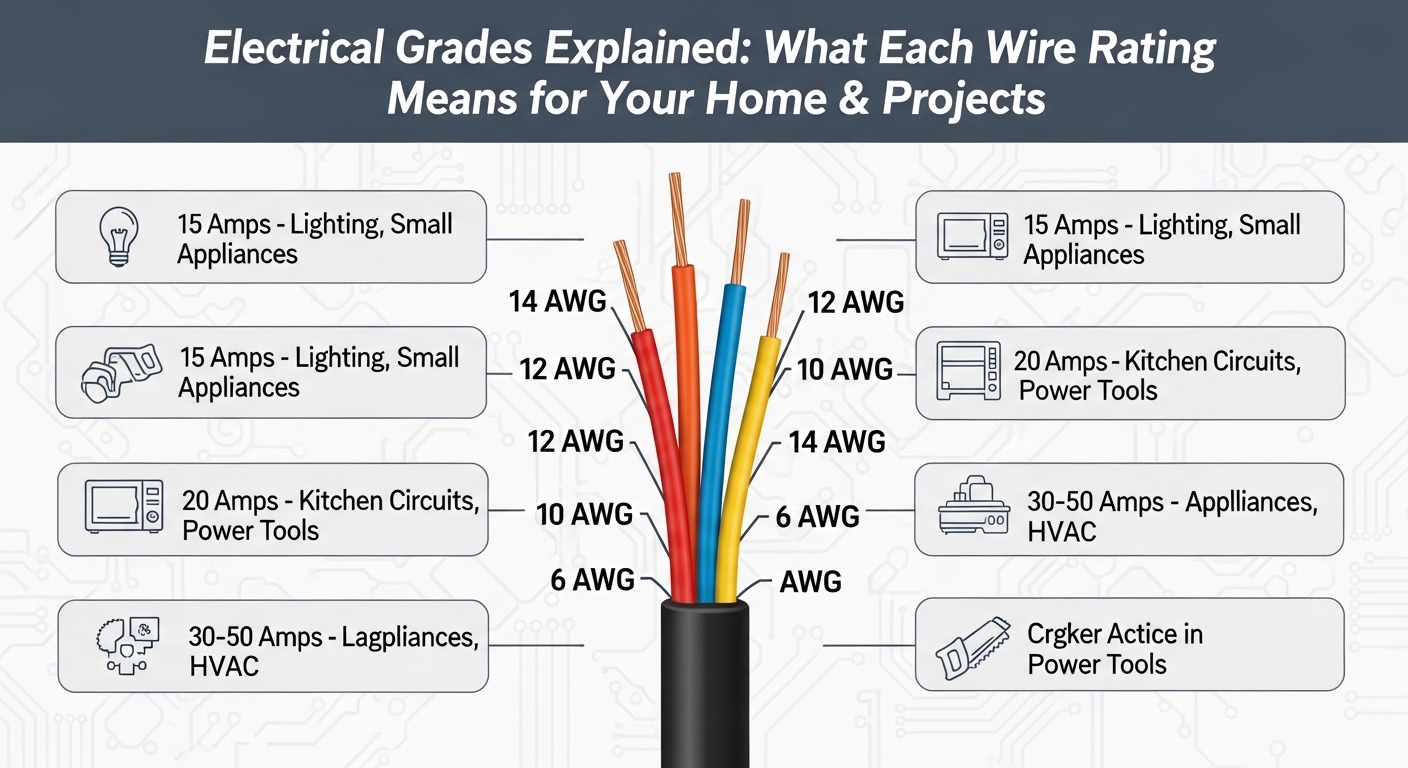
The gauge (AWG) of a wire determines how much current it can carry safely. Smaller numbers mean thicker wires, capable of handling more current. For example:
| Wire Gauge | Maximum Amperage | Common Use |
|---|---|---|
| 14 AWG | 15 amps | Lighting circuits |
| 12 AWG | 20 amps | Kitchen outlets |
| 10 AWG | 30 amps | Air conditioning |
| 6 AWG | 55 amps | Electric ranges, heavy appliances |
Pro Tip: Always select a wire gauge that exceeds your appliance’s amperage to avoid overheating.
High CPC Keywords to Include Naturally
-
Electrical wire ratings
-
Wire gauge chart
-
Best wire for home wiring
-
Residential electrical safety
-
Electrical wire types and uses
Factors to Consider When Choosing Electrical Wires
Choosing the right wire involves more than just ratings. Keep these points in mind:
-
Voltage Requirements: Ensure the wire’s voltage rating matches your system.
-
Temperature Conditions: High-heat areas require wires with higher heat resistance.
-
Environment: Indoor, outdoor, or underground wiring requires specific insulation types.
-
Budget vs. Safety: Don’t compromise safety for cost; quality wires prevent hazards.
Benefits of Using Proper Electrical Wire Grades
Using the correct wire rating offers:
-
Safety: Reduces fire and electrical shock risk
-
Efficiency: Prevents voltage drop and energy loss
-
Longevity: Wires last longer without degradation
-
Compliance: Meets local electrical codes and standards
Quick Tips for Home DIY Electrical Projects
-
Always turn off power before working on wiring.
-
Use a wire stripper to avoid damaging insulation.
-
Label wires clearly for future maintenance.
-
Consult local electrical codes before starting any installation.
-
When in doubt, hire a licensed electrician.
Conclusion
Understanding electrical grades and wire ratings is key to safe and efficient wiring. Whether you’re installing new circuits, upgrading appliances, or working on a DIY project, selecting the right wire prevents hazards and ensures optimal performance. Take time to check the wire type, gauge, and environment suitability before starting your next electrical project.
Ready to upgrade your home wiring? Choose the right wire today and ensure safety and efficiency for years to come.
FAQ
Q1: What is the difference between THHN and THW wires?
A1: THHN is heat-resistant with a nylon coating, suitable for dry locations, while THW is water-resistant and can be used in wet or dry environments.
Q2: Can I use the same wire for indoor and outdoor projects?
A2: Not always. Outdoor and underground wiring requires moisture-resistant insulation like UF wire, while indoor wiring can use THHN or TW.
Q3: How do I know what wire gauge I need?
A3: Check the appliance amperage and use a wire gauge chart. Always select a wire that can handle more than the expected load.
Q4: Are thicker wires always better?
A4: Thicker wires can carry more current, but over-sizing unnecessarily can be expensive and harder to install. Match the wire gauge to your load safely.
Q5: Is it safe to reuse old wires?
A5: Only if the insulation is intact and the wire meets the current rating. Otherwise, it’s best to replace with new wires for safety.