
Electric vehicles (EVs) are no longer a futuristic idea—they are quickly becoming part of everyday life. From compact city cars to electric trucks, EV adoption is accelerating across the globe. But how fast is this shift really happening, and why does it vary so much from one country to another?
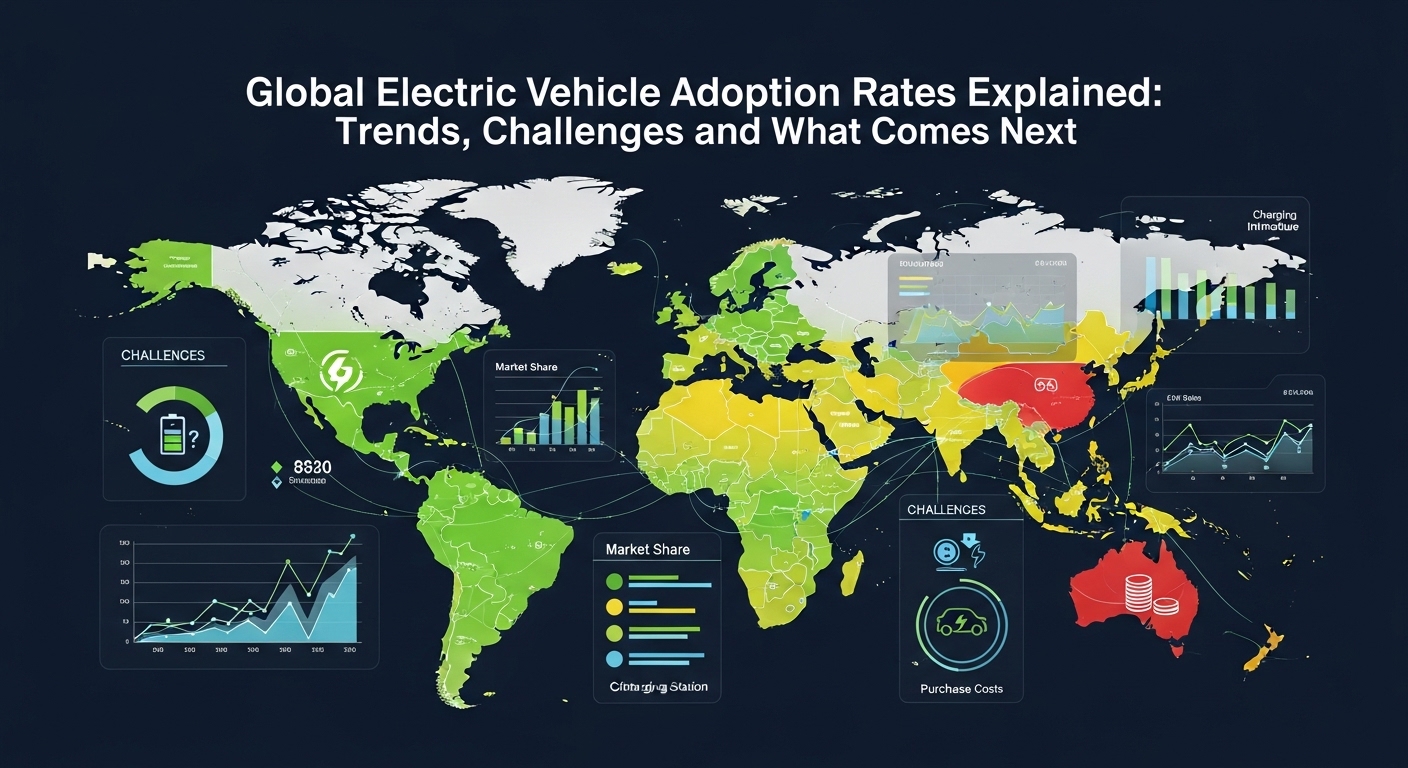
In this guide, we’ll break down global electric vehicle adoption rates, explain the key factors driving growth, explore regional differences, and look at what the future holds. Whether you’re an EV enthusiast, investor, or simply curious, this article will give you a clear and trustworthy overview.
What Is Electric Vehicle Adoption?
Electric vehicle adoption refers to how widely EVs are being purchased and used compared to traditional gasoline or diesel vehicles. It is usually measured by:
-
Percentage of EVs in total vehicle sales
-
Growth rate of EV registrations year over year
-
Expansion of EV charging infrastructure
-
Government and private sector support
Understanding adoption rates helps explain where the market is heading and which regions are leading the transition.
Global Overview of Electric Vehicle Adoption Rates
Worldwide, EV adoption has grown steadily over the past decade. Several factors have contributed to this trend:
-
Rising fuel costs
-
Improved battery technology
-
Increased environmental awareness
-
Lower long-term ownership costs
While global EV sales represent a growing share of new car purchases, adoption is uneven across regions due to differences in policy, infrastructure, and consumer readiness.
Key Drivers of Electric Vehicle Adoption
Government Policies and Incentives
One of the strongest drivers of EV adoption is supportive government policy. Many countries offer:
-
Purchase subsidies or tax credits
-
Reduced registration fees
-
Access to carpool or priority lanes
-
Long-term bans on internal combustion engine vehicles
These incentives significantly lower the upfront cost, making EVs more accessible to a wider audience.
Falling Battery Costs
Battery prices have declined sharply in recent years, making electric vehicles more affordable. As batteries become cheaper and more efficient, manufacturers can offer:
-
Longer driving ranges
-
Faster charging times
-
Lower overall vehicle prices
This directly impacts adoption rates worldwide.
Expansion of EV Charging Infrastructure
The availability of charging stations plays a major role in consumer confidence. Growth in:
-
Home charging solutions
-
Public fast-charging networks
-
Workplace charging stations
has helped reduce “range anxiety” and encouraged more people to switch to EVs.
Regional Breakdown of EV Adoption Rates
Europe: A Global Leader
Europe has some of the highest electric vehicle adoption rates globally. Strong emissions regulations and generous incentives have accelerated growth.
Key characteristics:
-
High EV market share in new car sales
-
Rapid expansion of charging networks
-
Strong consumer awareness of sustainability
Countries like Norway, the Netherlands, and Germany continue to set benchmarks for EV penetration.
Asia-Pacific: Rapid Growth at Scale
The Asia-Pacific region shows massive growth potential due to its large population and manufacturing capacity.
Notable trends include:
-
High EV production volume
-
Government-backed electrification programs
-
Growing demand for affordable electric cars
This region is shaping the future of mass-market electric mobility.
North America: Steady but Uneven Adoption
EV adoption in North America is growing steadily, though rates vary by location.
Factors influencing adoption:
-
State-level incentives and policies
-
Fuel price fluctuations
-
Expanding fast-charging networks
Urban areas generally see higher adoption compared to rural regions.
Emerging Markets: Early but Promising
In developing economies, EV adoption is still at an early stage. However, growth is expected due to:
-
Rising fuel import costs
-
Urban air quality concerns
-
Introduction of low-cost electric vehicles
Two- and three-wheel electric vehicles are often the first step toward broader adoption.
Challenges Slowing Global EV Adoption
Despite rapid progress, several challenges remain:
-
High upfront cost in some markets
-
Limited charging infrastructure in rural areas
-
Grid capacity and energy supply concerns
-
Consumer lack of awareness or misinformation
Addressing these issues is critical for sustaining long-term growth.
Future Outlook for Electric Vehicle Adoption
The future of EV adoption looks strong. Analysts expect continued growth driven by:
-
Stricter emissions standards
-
Advances in solid-state batteries
-
Increased competition among manufacturers
-
Greater investment in renewable energy
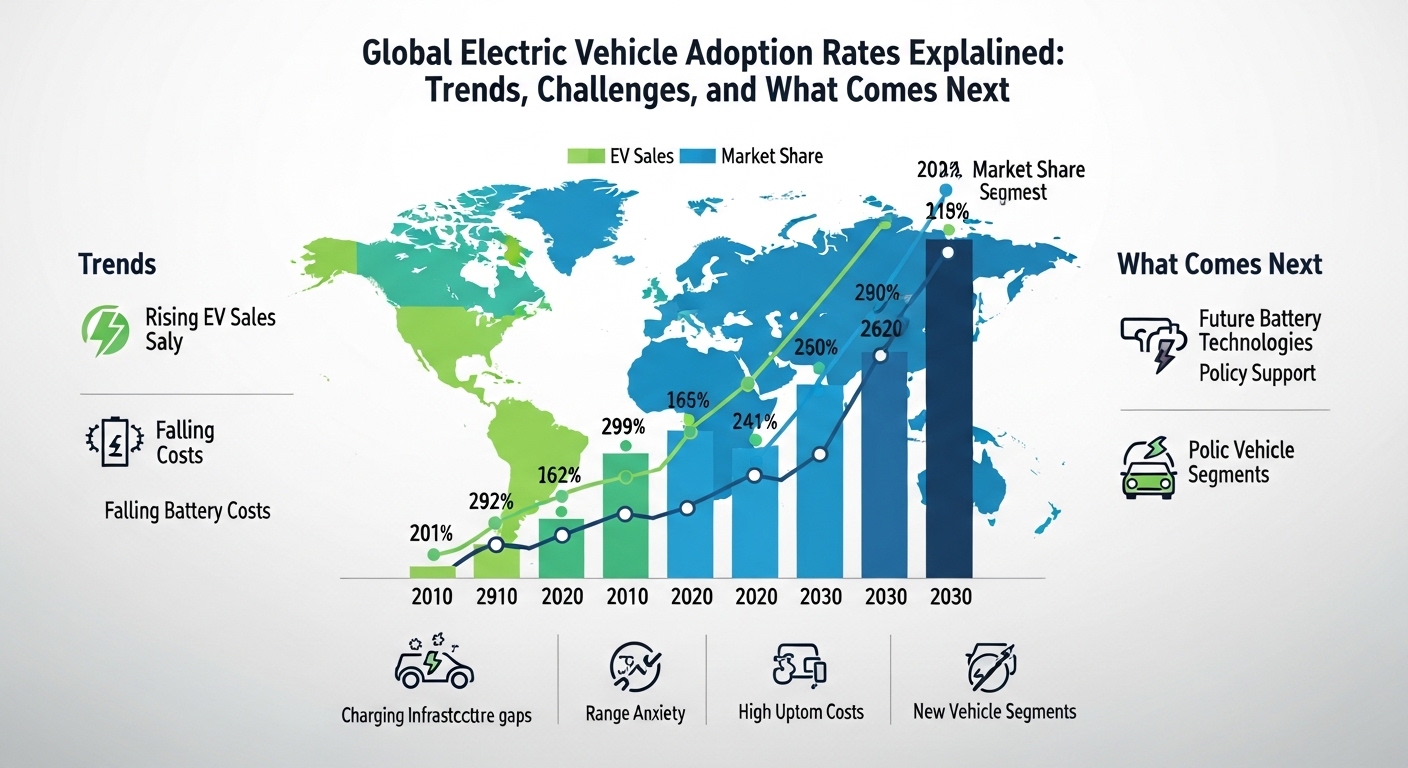
As electric vehicles become more affordable and convenient, adoption rates are likely to rise across all regions.
Why EV Adoption Rates Matter
Understanding EV adoption rates is important because they affect:
-
Energy demand and fuel markets
-
Environmental impact and emissions reduction
-
Job creation in new automotive sectors
-
Urban planning and transportation policy
For consumers, it also helps inform smarter purchasing decisions.
Conclusion
Global electric vehicle adoption rates are rising, but the pace differs widely across regions. Government incentives, battery technology, and charging infrastructure are the main forces shaping this transition. While challenges remain, the long-term outlook for electric vehicles is highly positive.
If you’re considering an EV or simply following the trend, now is the perfect time to stay informed and engaged. Feel free to share your thoughts or experiences with electric vehicles in the comments.
Frequently Asked Questions (FAQ)
1. Which region has the highest EV adoption rate?
Europe currently leads in electric vehicle adoption, especially in countries with strong government incentives and charging infrastructure.
2. Are electric vehicles cheaper to own long-term?
Yes, EVs often have lower maintenance and fueling costs, making them cost-effective over time.
3. What is the biggest barrier to EV adoption?
The most common barriers are upfront cost and limited charging infrastructure in certain areas.
4. Will EV adoption continue to grow globally?
Yes, continued policy support, falling battery prices, and improved technology point to strong future growth.
5. Do EVs really help the environment?
When combined with clean energy sources, electric vehicles significantly reduce emissions compared to traditional cars.