
Global EV Adoption Forecast for 2026 and Beyond: What the Future of Electric Vehicles Looks Like
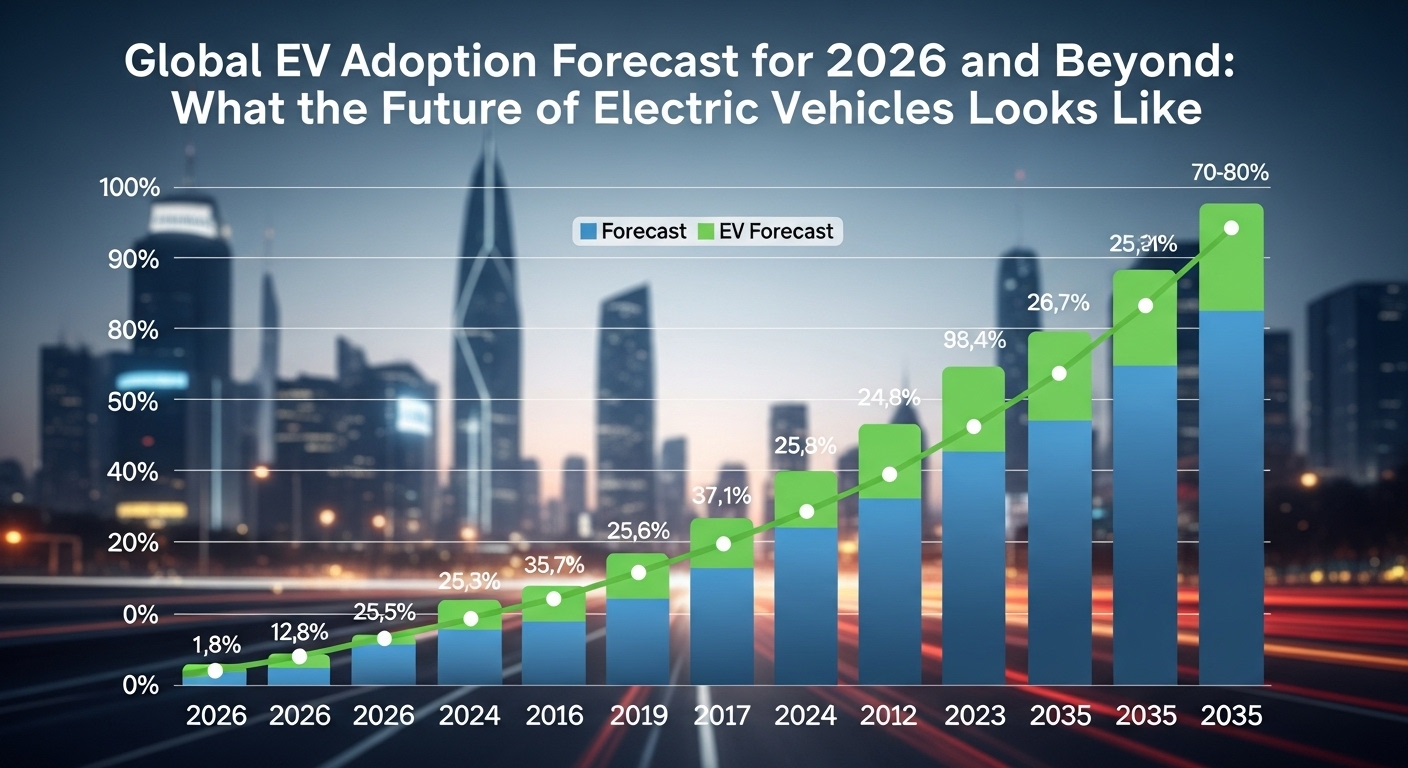
Electric vehicles are no longer a distant vision of the future. They are already reshaping how people move, invest, and think about energy. As we approach 2026, interest in electric mobility is accelerating across developed and emerging markets alike. Governments are tightening emissions rules, consumers are looking for electric car cost savings, and businesses are investing heavily in clean transportation solutions.
In this article, we explore the global EV adoption forecast for 2026 and beyond, breaking down market growth, regional trends, charging infrastructure expansion, and the key factors driving demand. Whether you are an investor, policy watcher, or everyday reader, this guide offers a clear and trustworthy outlook on where the electric vehicle market is heading.
Global EV Adoption Forecast: A Big Picture View
The electric vehicle market forecast for the next decade shows strong and steady growth. By 2026, electric vehicles are expected to move from early adoption into a more mature phase in many regions.
Several global trends support this outlook:
-
Falling battery production costs
-
Increased government EV incentives
-
Rising fuel prices and energy security concerns
-
Growing awareness of environmental impact
Analysts widely expect the global EV adoption rate to continue climbing well beyond 2026, with electric vehicles becoming a mainstream choice rather than a niche option.

Key Drivers of EV Adoption After 2026
Government Policies and EV Incentives
One of the strongest forces behind EV growth is policy support. Many countries are offering:
-
Purchase subsidies or tax credits
-
Reduced registration fees
-
Preferential access to city centers
-
Long-term plans to limit new combustion vehicle sales
These government EV incentives are designed to lower upfront costs and increase consumer confidence. Even as some incentives gradually decrease after 2026, stricter emissions regulations are expected to keep demand high.
Declining Battery Costs and Technology Advances
Battery technology continues to improve at a rapid pace. As manufacturing scales up, the cost per kilowatt-hour keeps falling. This trend is critical because batteries account for a large portion of an electric vehicle’s price.
By 2026 and beyond, buyers can expect:
-
Longer driving ranges
-
Faster charging times
-
Improved battery durability
-
Lower overall vehicle prices
These improvements directly support higher EV adoption rates worldwide.
Regional EV Adoption Trends
North America
In North America, electric vehicle growth is driven by a mix of consumer demand and regulatory pressure. Urban areas are leading the shift, supported by expanding public charging networks and workplace charging programs.
Key trends include:
-
Increased investment in EV charging infrastructure
-
Fleet electrification by delivery and service companies
-
Growing interest in electric SUVs and pickup-style vehicles
The region is expected to see consistent EV market growth after 2026, especially as charging access improves in suburban and rural areas.
Europe
Europe is widely considered one of the fastest-moving EV markets. Strong emissions standards and long-term climate goals are pushing rapid adoption.
Factors supporting growth include:
-
Dense charging infrastructure in major cities
-
High fuel prices that increase electric car cost savings
-
Consumer trust in clean mobility policies
By 2026, electric vehicles are projected to represent a significant share of new car registrations across much of the region.
Asia-Pacific
The Asia-Pacific region plays a major role in the global EV adoption forecast. Large populations, urban air quality concerns, and strong manufacturing capabilities are accelerating the shift.
Notable developments include:
-
Large-scale EV production capacity
-
Public transportation electrification
-
Competitive pricing of electric models
Beyond 2026, this region is expected to remain a key growth engine for the global electric vehicle market.

EV Charging Infrastructure Investment: A Critical Factor
No EV forecast is complete without addressing charging access. EV charging infrastructure investment is expanding rapidly, but challenges remain.
Current Progress
By 2026, many countries aim to achieve:
-
Nationwide fast-charging corridors
-
Increased residential and apartment charging solutions
-
Smart grid integration for load balancing
Public and private partnerships are playing a major role in funding this expansion.
Challenges After 2026
Despite progress, several issues need attention:
-
Grid capacity upgrades
-
Standardization of charging systems
-
Equitable access in rural and low-income areas
Addressing these challenges will be essential to sustain long-term EV adoption beyond 2026.
Consumer Perspective: Cost and Convenience
Electric Car Cost Savings Over Time
While upfront prices still matter, long-term savings are a major selling point. Electric vehicles typically offer:
-
Lower fuel costs
-
Reduced maintenance expenses
-
Fewer mechanical components
As prices continue to fall, total ownership costs are expected to favor electric vehicles even more strongly after 2026.
Changing Buyer Preferences
Consumers are increasingly prioritizing:
-
Quiet and smooth driving experience
-
Home charging convenience
-
Environmental responsibility
These preferences suggest that EV adoption is supported not only by economics but also by lifestyle choices.
Business and Investment Opportunities
The EV transition opens doors for multiple industries, including:
-
Charging infrastructure providers
-
Battery recycling and energy storage firms
-
Software and mobility service platforms
For investors, the electric vehicle market forecast highlights long-term growth potential, especially in supporting technologies rather than vehicles alone.
Environmental Impact and Sustainability
Beyond economics, electric vehicles play a role in reducing local air pollution and supporting climate goals. While electricity sources vary by region, cleaner grids improve the overall environmental benefits of EVs over time.
After 2026, increased renewable energy integration is expected to strengthen the sustainability case for electric mobility worldwide.
Conclusion: What the EV Future Looks Like After 2026
The global EV adoption forecast for 2026 and beyond points to steady, long-term growth driven by policy support, technology improvements, and changing consumer attitudes. While challenges remain, especially around infrastructure and grid capacity, the overall direction is clear.
Electric vehicles are moving from an alternative option to a central part of global transportation systems. If you are considering an EV, investing in related industries, or simply following the future of mobility, the coming years will be critical.
Have thoughts or questions about the EV transition? Share your perspective in the comments and join the conversation.
Frequently Asked Questions (FAQ)
1. Will electric vehicles become cheaper after 2026?
Yes, continued battery cost reductions and manufacturing scale are expected to lower EV prices over time.
2. Is EV charging infrastructure expanding fast enough?
Progress is strong, but further investment is needed, especially in rural and high-density housing areas.
3. Are government EV incentives expected to continue?
Many incentives may be reduced gradually, but stricter emissions rules will likely maintain demand.
4. What is the biggest challenge for EV adoption after 2026?
Charging accessibility and grid capacity upgrades remain the main challenges.
5. Is EV adoption growing globally or only in certain regions?
EV adoption is growing worldwide, with particularly strong momentum in Europe and Asia-Pacific.