Global EV Sales Trends: What the Data Shows About the Future of Electric Vehicles
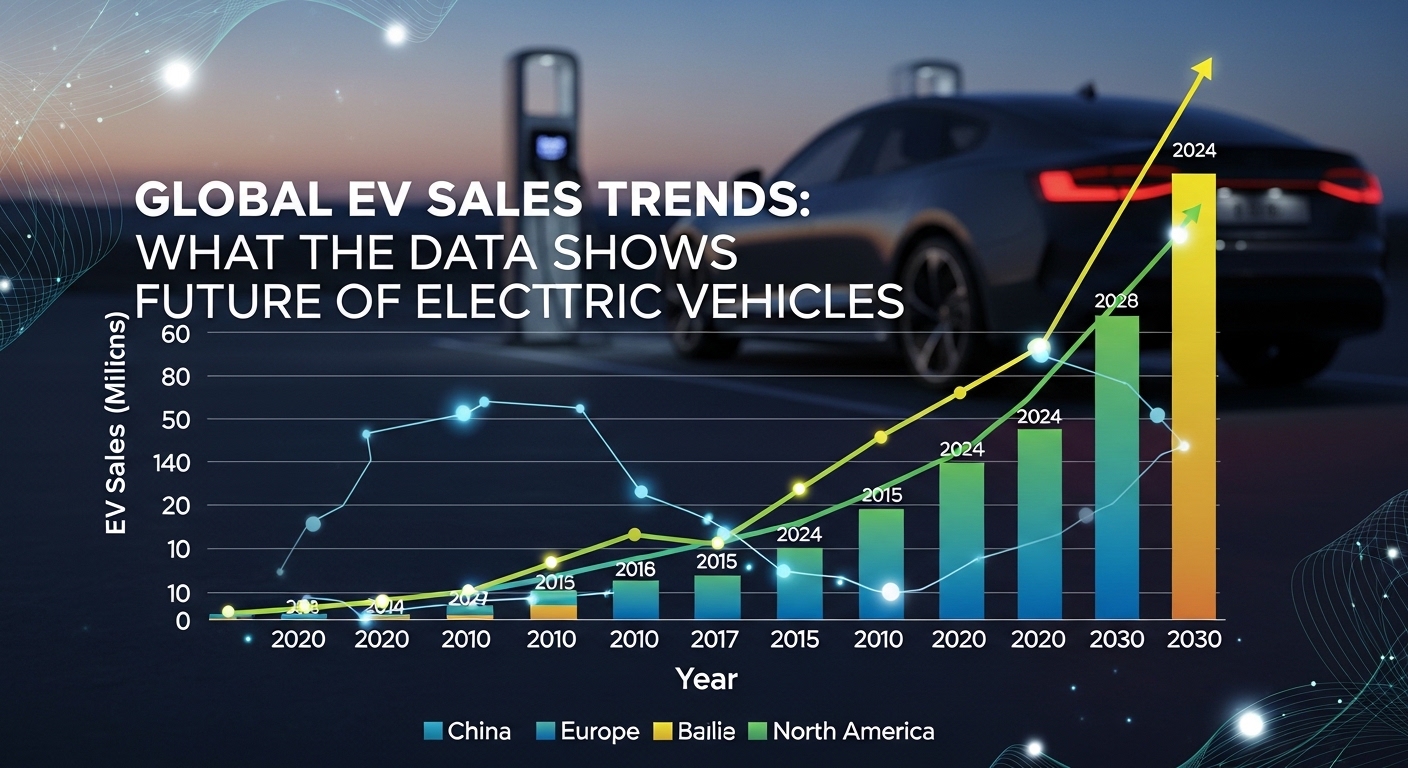
Annual electric vehicle sales continue to rise as global EV adoption accelerates across major automotive markets.
Electric vehicles are no longer a niche innovation. They are becoming a central part of the global automotive industry. From Europe to Asia and North America, EV adoption is accelerating at a pace few predicted a decade ago.
But what does the actual data show? Are global EV sales still growing? Which regions are leading? And what does this mean for investors, consumers, and policymakers?
In this detailed guide, we break down global EV sales trends, analyze key market drivers, and explore what the numbers suggest about the future of electric mobility.
The Big Picture: Global EV Sales Growth
Over the past few years, electric vehicle sales have experienced consistent double-digit growth worldwide. According to international market research and energy agencies, global EV sales have crossed multi-million unit milestones annually, representing a rapidly increasing share of total vehicle sales.
Key Highlights From Recent Data:
-
EV sales account for a growing percentage of total global car sales
-
Battery electric vehicles (BEVs) lead growth over plug-in hybrids
-
China remains the largest EV market globally
-
Europe follows closely with strong policy support
-
The U.S. market continues expanding with federal incentives
This growth reflects long-term structural change rather than short-term hype.
For verified international energy data, refer to the
International Energy Agency EV reports.
Regional Breakdown: Where EV Adoption Is Strongest
1. China: The Global EV Leader
China dominates global EV sales volume. Several factors explain this:
-
Strong government subsidies and tax incentives
-
Massive domestic battery manufacturing
-
Urban air quality regulations
-
Wide availability of affordable EV models
China’s EV penetration rate in new vehicle sales has grown significantly in recent years, making it the largest and most competitive EV market worldwide.
2. Europe: Policy-Driven Growth
European countries have aggressively pushed EV adoption through:
-
Strict CO2 emissions standards
-
Financial incentives for electric car buyers
-
Expansion of public EV charging infrastructure
-
Plans to phase out internal combustion engines
Countries like Norway, Germany, and the Netherlands show especially high EV adoption rates relative to total car sales.

For European transport data, see:
👉 European Environment Agency: https://www.eea.europa.eu
3. United States: Gradual but Steady Expansion
The U.S. EV market has grown more gradually compared to China and Europe but continues to expand due to:
-
Federal EV tax credits
-
State-level incentives
-
Growth in EV charging station investment
-
Increased consumer awareness
The Inflation Reduction Act has also strengthened incentives for domestic EV production and battery manufacturing.
For official U.S. energy data:
👉 U.S. Department of Energy: https://www.energy.gov
Battery Costs: The Hidden Driver Behind EV Sales
One of the most important high-CPC topics in electric mobility is EV battery cost reduction.
Over the last decade:
-
Lithium-ion battery prices have dropped dramatically
-
Energy density has improved
-
Manufacturing scale has increased
-
Supply chains have matured
Lower battery costs make EVs more price-competitive with gasoline cars. This directly impacts global EV sales growth and market penetration.
Keywords naturally related to this trend include:
-
electric vehicle battery price forecast
-
lithium battery cost per kWh
-
EV battery recycling investment
-
solid-state battery development
These long-term cost improvements are a major reason analysts expect continued EV market growth.
EV Charging Infrastructure Expansion
Another major trend shaping global EV sales data is the rapid expansion of charging infrastructure.
Why Charging Matters
Consumers often cite “range anxiety” as a barrier to EV adoption. However, charging networks are expanding quickly.
Growth areas include:
-
Fast-charging networks along highways
-
Residential EV charger installation
-
Workplace charging programs
-
Smart charging solutions
Investment in EV charging stations is a high-growth sector. Governments and private companies are allocating billions toward:
-
Public charging expansion
-
Grid modernization
-
Renewable energy integration
As charging access improves, consumer confidence increases — directly boosting EV sales.
Fleet Electrification and Commercial Vehicles
A major shift in recent data is the growth of commercial EV fleets.
Companies are increasingly investing in:
-
Electric delivery vans
-
Electric buses
-
Electric trucks
-
Corporate fleet electrification programs
This segment is important because fleet purchases can rapidly increase total EV sales volumes.
High-value related search terms include:
-
commercial electric vehicle financing
-
fleet electrification cost savings
-
electric delivery van ROI
-
EV fleet management software
Fleet adoption not only drives sales numbers but also improves visibility and public trust in electric mobility.
Government Incentives and Policy Impact
Government policy remains one of the strongest drivers behind global EV sales trends.
Common Incentive Types:
-
Purchase tax credits
-
Direct subsidies
-
Reduced registration fees
-
Fuel economy regulations
-
Emission penalties for manufacturers
When incentives are introduced, EV sales often spike. When incentives are reduced, sales may temporarily slow.
This pattern shows how policy support plays a major role in market acceleration.
EV Market Share vs. Total Auto Market
One of the most important metrics is EV market share.
Instead of focusing only on total sales volume, analysts examine:
-
Percentage of new car sales that are electric
-
Year-over-year EV market growth rate
-
Regional EV penetration levels
In some countries, EVs already represent a significant share of new vehicle sales. Globally, the percentage continues rising steadily each year.
This suggests that electric mobility is moving from early adoption to mainstream acceptance.
Investment Trends in the EV Sector
Global EV sales trends are closely linked to investment patterns.
Key investment areas include:
-
Battery gigafactories
-
Raw material mining (lithium, cobalt, nickel)
-
EV charging infrastructure stocks
-
Electric vehicle manufacturing plants
-
Renewable energy integration
High-CPC financial keywords in this space include:
-
electric vehicle stock forecast
-
EV battery investment opportunities
-
renewable energy infrastructure funds
-
clean energy ETF performance
Strong capital investment signals long-term industry confidence.
Challenges Affecting EV Sales Growth
While the overall trend is positive, there are challenges that influence the data:
-
Supply chain disruptions
-
Battery raw material shortages
-
Charging infrastructure gaps
-
Economic slowdowns
-
Consumer price sensitivity
However, long-term projections remain optimistic due to technological progress and climate policy commitments.
What the Data Suggests About the Future
Based on current global EV sales trends, several conclusions emerge:
1. Growth Is Structural, Not Temporary
EV adoption is supported by policy, cost reductions, and consumer demand.
2. Asia Will Continue Leading
China’s production capacity and domestic market size provide long-term momentum.
3. Battery Innovation Will Accelerate Adoption
Advances like solid-state batteries may further reduce costs and increase range.
4. Infrastructure Investment Is Critical
Charging network expansion directly impacts consumer confidence.
5. Commercial Fleets Could Be a Game Changer
Large-scale fleet electrification can significantly increase total EV sales.
Why This Matters for Consumers and Investors
If you’re considering buying an electric vehicle, the data suggests:
-
Wider model availability
-
Improved battery range
-
Better charging access
-
Increasing resale market strength
If you’re an investor or business owner, EV-related sectors like:
-
Charging infrastructure
-
Battery technology
-
Renewable energy integration
-
Fleet electrification services
may present long-term growth opportunities.
Conclusion
Global EV sales trends clearly show that electric vehicles are no longer experimental — they are becoming central to the future of transportation.
The data reveals consistent growth, expanding infrastructure, falling battery costs, and increasing government support. While short-term fluctuations may occur, the long-term trajectory remains strong.
Whether you are a consumer researching your next car or an investor evaluating clean energy opportunities, understanding these trends helps you make informed decisions.
What do you think about the future of electric vehicles? Share your thoughts or questions in the comments below.
FAQ
1. Are global EV sales still increasing?
Yes. Recent data shows continued year-over-year growth in electric vehicle sales across major markets.
2. Which country leads in EV sales?
China currently leads in total EV sales volume and production capacity.
3. Why are EV battery prices falling?
Advances in lithium-ion technology, larger production scale, and improved supply chains have reduced battery costs.
4. Will EVs replace gasoline cars completely?
Many governments plan to phase out new gasoline vehicle sales over the coming decades, but full replacement will take time.
5. Is investing in EV infrastructure profitable?
EV charging infrastructure and battery manufacturing are considered high-growth sectors, though investment risks should always be evaluated carefully.