How to Choose the Best EV Battery for Long Range: A Complete Guide
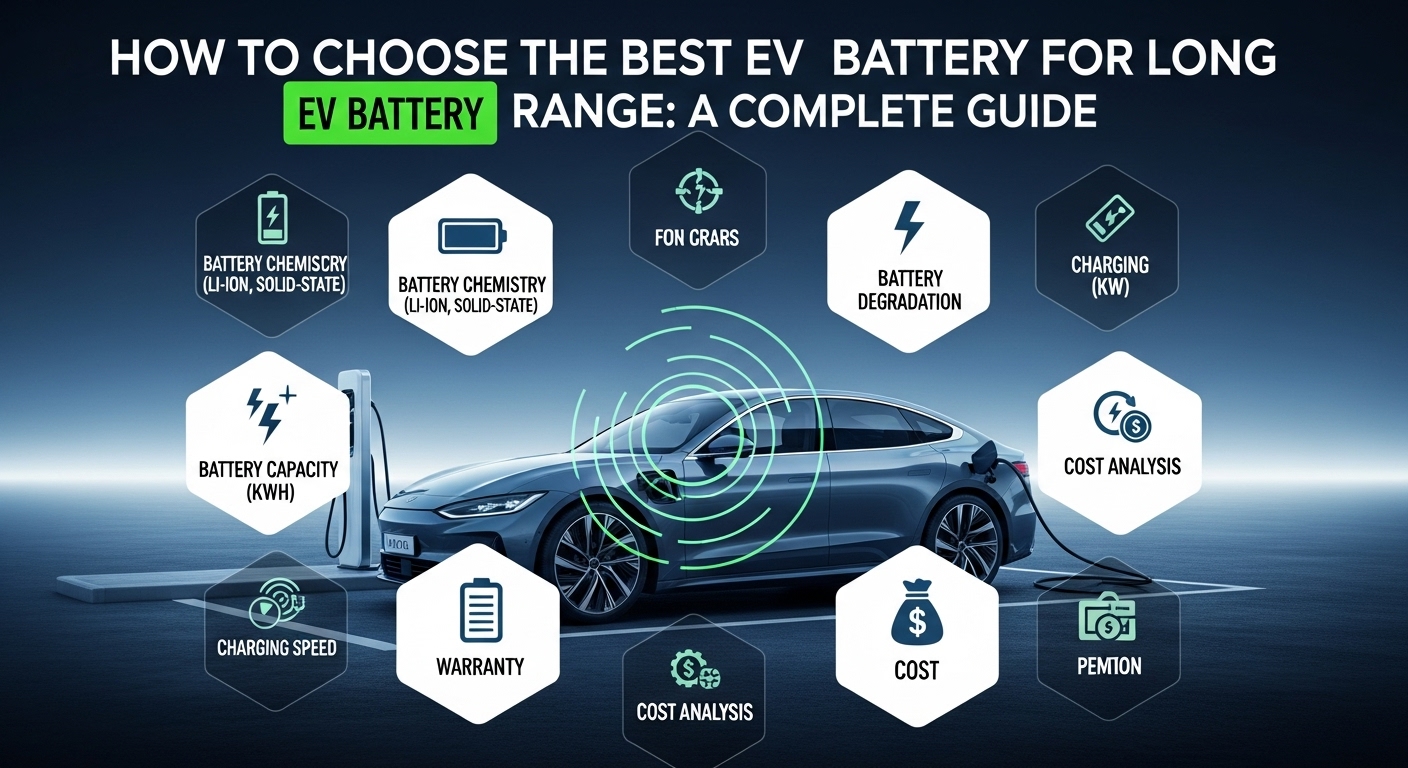
Explore the key features of top EV batteries that ensure maximum range and efficiency for your electric car.
How to Choose the Best EV Battery for Long Range: A Complete Guide
Electric vehicles (EVs) are becoming increasingly popular, and one of the most important factors affecting your driving experience is the battery. A high-quality EV battery not only determines your car’s range but also impacts charging speed, longevity, and overall performance. But with so many options available, how do you choose the best EV battery for long-range driving? This guide will help you make an informed decision.
Understanding EV Batteries
EV batteries are the heart of an electric vehicle. They store energy and power your car’s motor. Most modern EVs use lithium-ion batteries because of their high energy density, efficiency, and long lifespan.
Key Features to Consider:
-
Energy Capacity (kWh): Higher capacity means longer range. For example, a 75 kWh battery can take you farther than a 50 kWh battery.
-
Charging Speed: Fast-charging capability can save hours on long trips.
-
Battery Lifespan: Look for batteries that maintain performance after thousands of charge cycles.
-
Warranty: Manufacturers often provide warranties of 8–10 years or more.
Types of EV Batteries
1. Lithium-Ion (Li-ion) Batteries
-
Most common in modern EVs.
-
High energy density and long cycle life.
-
Lightweight and efficient.
2. Lithium Iron Phosphate (LiFePO4) Batteries
-
Safer and more stable than standard lithium-ion.
-
Slightly lower energy density but excellent longevity.
-
Ideal for drivers prioritizing durability and safety.
3. Solid-State Batteries (Emerging Technology)
-
Use a solid electrolyte instead of liquid.
-
Offer higher energy density and faster charging.
-
Currently expensive and less widely available.
How to Choose the Best EV Battery for Long Range
Choosing the right EV battery requires considering several factors that go beyond just the price.
1. Determine Your Driving Needs
-
Daily Commute: If you mostly drive short distances, a mid-range battery may suffice.
-
Long-Distance Travel: Opt for high-capacity batteries (70 kWh or more) for fewer stops.
2. Evaluate Battery Efficiency
-
Check the miles per kWh rating of the vehicle.
-
Higher efficiency means you can travel farther using less energy.
3. Check the Charging Network
-
Ensure that fast-charging stations compatible with your battery are available in your area.
4. Consider Battery Longevity
-
Look at degradation rates: some batteries lose less than 5% of capacity over 5 years.
-
Solid warranties are a good indicator of battery reliability.
5. Compare Battery Prices
-
High-capacity batteries cost more upfront but can save time and reduce range anxiety.
-
Factor in long-term savings from fewer charging sessions and better efficiency.
Tips for Extending EV Battery Life
Maintaining your battery properly can increase its lifespan and improve long-range performance.
-
Avoid extreme temperatures: Park in shaded or climate-controlled areas.
-
Use moderate charging: Avoid frequent 100% charges or deep discharges.
-
Keep your software updated: EV manufacturers often improve battery management via software.
-
Plan efficient routes: Reduce stop-and-go driving to save energy.

Conclusion
Choosing the best EV battery for long-range driving is more than just picking the highest capacity. By considering energy efficiency, charging speed, battery type, and longevity, you can select a battery that suits your driving habits and maximizes your EV’s performance. Remember to maintain your battery properly and stay informed about new technologies.
Take Action: Check the specifications of your EV model, compare battery options, and choose the one that fits your lifestyle. If you have questions or experiences to share, comment below!
FAQ
1. What is the best EV battery type for long range?
Lithium-ion batteries are currently the most common choice for long-range EVs due to high energy density and efficiency.
2. How long do EV batteries last?
Most EV batteries last 8–10 years or 100,000–150,000 miles, depending on usage and maintenance.
3. Can I upgrade my EV battery for longer range?
Some EVs allow battery upgrades, but it depends on the manufacturer and vehicle model.
4. How can I maximize my EV battery life?
Avoid extreme charging patterns, maintain moderate temperatures, and follow manufacturer guidelines.
5. Are solid-state batteries better than lithium-ion?
Solid-state batteries offer higher energy density and faster charging, but they are currently less accessible and more expensive.