
How to Choose the Best EV Charger for Your Home: A Complete Buyer’s Guide
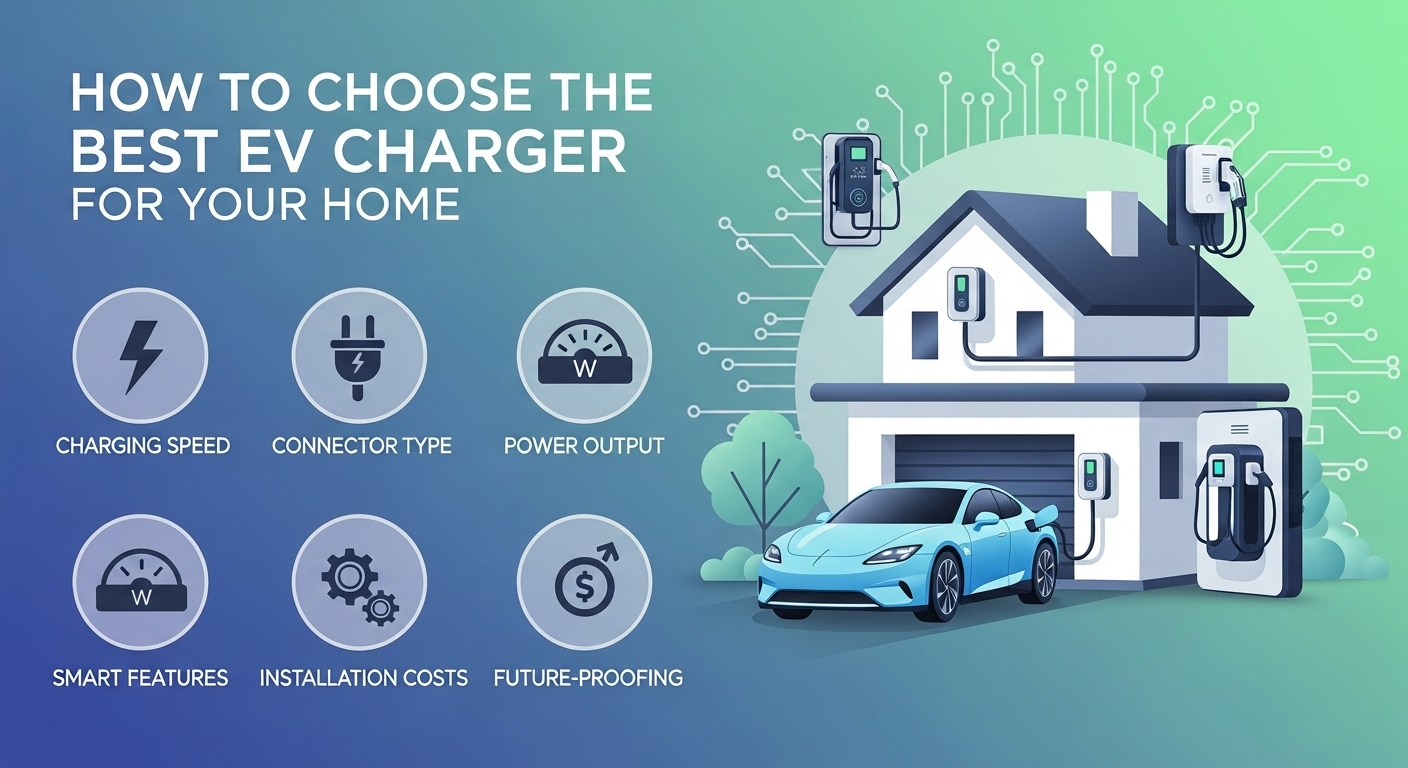
Introduction
Electric vehicles are no longer a thing of the future—they are already part of everyday life. As more people switch to electric cars, one important question comes up quickly: how do you choose the best EV charger for your home?
Charging at home is convenient, cost-effective, and gives you full control over your vehicle’s energy needs. But with many charger types, power levels, and features available, choosing the right one can feel confusing. This guide will walk you through everything you need to know in simple terms, so you can make a smart, confident decision that fits your home, your car, and your budget.
Why Home EV Charging Matters
Home EV charging is more than just convenience. It directly affects your daily routine, charging costs, and even your home’s electrical safety.
Benefits of Installing a Home EV Charger
-
Charge your vehicle overnight and wake up fully charged
-
Lower electricity costs compared to public charging
-
Increased home value for future buyers
-
Better battery management and longevity
-
Full control over charging schedules
Choosing the right home EV charging station ensures you get these benefits without unnecessary expenses or risks.

Understanding EV Charger Levels
Before choosing a charger, it’s essential to understand the different charging levels available for residential use.
Level 1 EV Chargers (Standard Outlet)
Level 1 chargers use a standard household outlet.
Pros:
-
No installation required
-
Very low upfront cost
Cons:
-
Extremely slow charging
-
Not ideal for daily driving
Best for:
Drivers with short commutes or plug-in hybrid vehicles.
Level 2 EV Chargers (Most Popular Choice)
Level 2 chargers require a dedicated electrical circuit and offer much faster charging.
Pros:
-
Charges up to 5–7 times faster than Level 1
-
Ideal for daily home use
-
Wide range of smart features
Cons:
-
Requires professional installation
-
Higher upfront cost
Best for:
Most homeowners looking for the best EV charger for home use.
Key Factors to Consider When Choosing a Home EV Charger
Charging Speed and Power Output
Charging speed depends on the charger’s power output, measured in kilowatts (kW). Higher power means faster charging, but your home’s electrical system must support it.
Things to consider:
-
Daily driving distance
-
Vehicle battery size
-
Available electrical capacity
For most homes, a moderate power Level 2 charger offers the best balance between speed and safety.
Home Electrical Capacity
Not every home can support high-power chargers without upgrades.
Check:
-
Electrical panel capacity
-
Available circuit breakers
-
Wiring condition
A qualified electrician can confirm whether upgrades are needed, which helps avoid unexpected costs later.
Indoor vs Outdoor Installation
Decide where you’ll install the charger before purchasing.
Indoor installation:
-
Protected from weather
-
Ideal for garages
Outdoor installation:
-
Requires weather-resistant design
-
Should include safety features like waterproof casing
Choose a charger designed for your installation environment to ensure durability and safety.
Smart EV Charger Features
Smart features can improve convenience and energy efficiency.
Popular features include:
-
Mobile app control
-
Scheduled charging
-
Energy usage tracking
-
Wi-Fi connectivity
-
Integration with solar systems
If you want better control over electricity costs, a smart home EV charger can be a worthwhile investment.
Safety and Certification Considerations
Safety should never be compromised when dealing with high electrical loads.
Important Safety Features
-
Overcurrent protection
-
Temperature monitoring
-
Automatic shutoff
-
Ground fault protection
Always choose chargers that meet recognized electrical safety standards to protect your home and vehicle.
Installation Costs and Budget Planning
Typical Cost Breakdown
-
Charger unit
-
Electrical upgrades (if needed)
-
Professional installation
While cheaper options exist, investing in a reliable residential EV charger often saves money long-term by reducing maintenance and energy waste.
Energy Efficiency and Electricity Costs
Home charging costs vary depending on electricity rates and charging habits.
Tips to Reduce Charging Costs
-
Charge during off-peak hours
-
Use scheduled charging
-
Monitor energy consumption
-
Combine charging with solar energy if available
Efficient charging not only lowers bills but also reduces strain on your local power grid.
Future-Proofing Your EV Charger Choice
Even if your current vehicle has modest charging needs, future models may require more power.
How to Future-Proof Your Setup
-
Choose a charger with adjustable power settings
-
Ensure wiring supports higher capacity
-
Leave room for electrical panel upgrades
Planning ahead ensures your home charger remains useful for years.
Common Mistakes to Avoid
Many homeowners make avoidable mistakes when choosing an EV charger.
Avoid these pitfalls:
-
Buying without checking electrical capacity
-
Choosing the cheapest option without safety checks
-
Ignoring installation requirements
-
Overpaying for unnecessary features
Taking time to research ensures you select the best home EV charging solution for your needs.
Conclusion
Choosing the best EV charger for your home doesn’t have to be complicated. By understanding charger levels, power requirements, safety features, and installation needs, you can make a confident decision that fits your lifestyle and budget.
Home charging is one of the biggest advantages of owning an electric vehicle. A well-chosen charger saves time, reduces costs, and adds long-term value to your home. If you’re planning to switch to electric or upgrade your current setup, now is the perfect time to invest wisely.
Have questions or experiences to share? Leave a comment and join the conversation.
Frequently Asked Questions (FAQ)
1. What is the best EV charger for home use?
For most homeowners, a Level 2 charger offers the best balance of charging speed, safety, and convenience.
2. Do I need a professional to install a home EV charger?
Yes, professional installation is recommended to ensure safety and compliance with electrical standards.
3. Can I use a home EV charger outdoors?
Yes, but make sure the charger is designed for outdoor use and has proper weather protection.
4. How much does it cost to charge an EV at home?
Costs depend on electricity rates, but home charging is usually much cheaper than public charging stations.
5. Is a smart EV charger worth it?
If you want better control over charging schedules and energy usage, smart features can be very helpful.