
How to Maximize Electric Car Range in Cold Weather: Practical Tips That Really Work

Cold weather can be challenging for electric car owners. If you’ve ever noticed your electric car range dropping during winter, you’re not alone. Low temperatures affect battery performance, cabin heating, and overall efficiency, often reducing driving range more than expected.
The good news? With the right strategies, you can significantly improve electric car winter range without sacrificing comfort or safety. This guide explains how to maximize electric car range in cold weather using practical, real-world tips that are easy to follow and budget-friendly. Whether you’re new to electric vehicles or an experienced driver, these insights will help you get the most out of your EV during winter.
Why Cold Weather Reduces Electric Car Range
Before diving into solutions, it’s important to understand why electric cars lose range in winter.
Battery Chemistry Slows Down
Lithium-based batteries are sensitive to temperature. In cold conditions:
-
Chemical reactions inside the battery slow down
-
Less energy is available for driving
-
Charging becomes less efficient
This directly impacts EV battery performance in winter.
Increased Energy Use
Cold weather increases energy consumption due to:
-
Cabin heating
-
Battery warming systems
-
Heated seats, steering wheels, and defrosters
All of these draw power from the battery, reducing usable range.
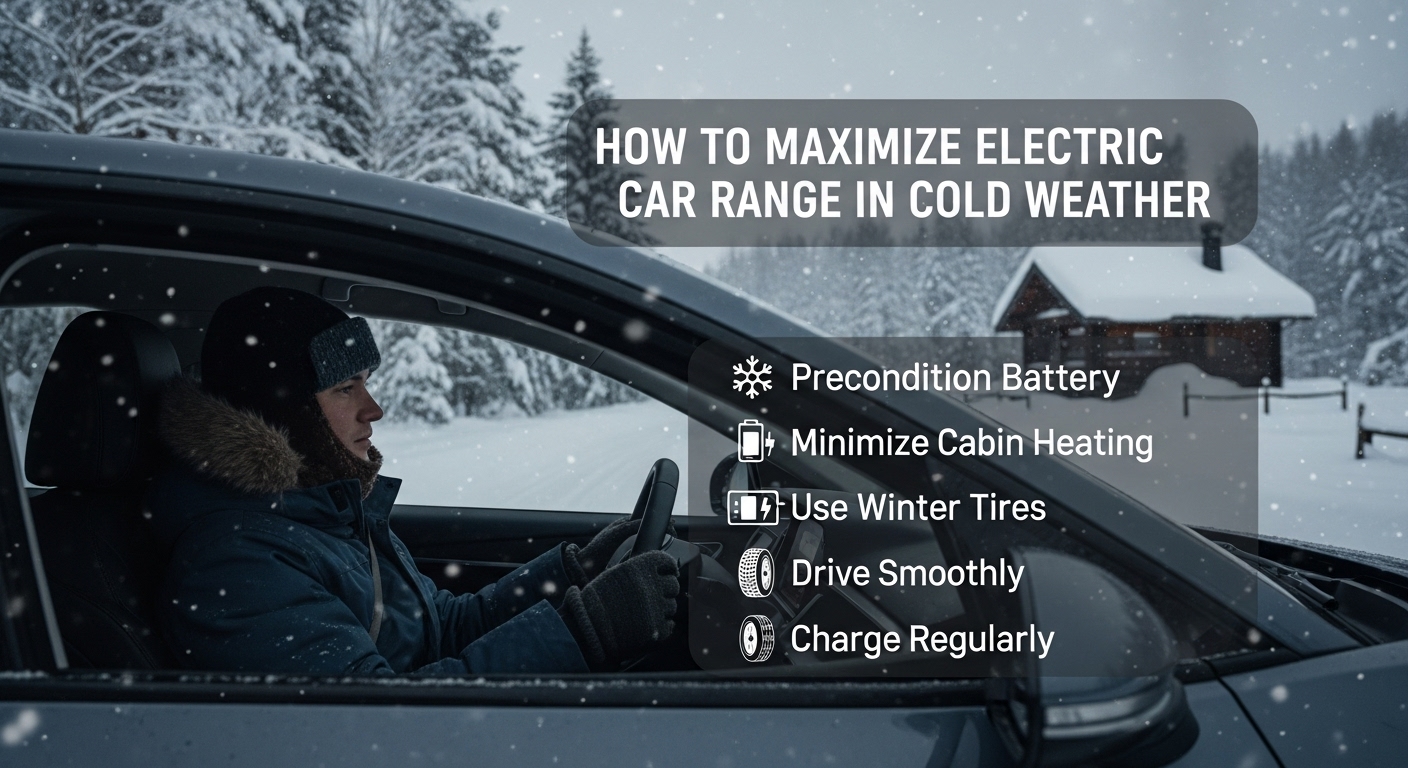
How to Maximize Electric Car Range in Cold Weather
Precondition Your Electric Car Before Driving
One of the most effective ways to improve winter range is preconditioning.
What is preconditioning?
Preconditioning warms the battery and cabin while the car is still plugged in.
Benefits:
-
Preserves battery energy for driving
-
Improves regenerative braking
-
Enhances driving efficiency
Tip: Schedule preconditioning 15–30 minutes before departure, especially when using home EV charging in winter.
Optimize Cabin Heating for Better EV Efficiency
Cabin heating is one of the biggest range killers in cold weather.
Smart Heating Tips:
-
Use seat and steering wheel heaters instead of blasting cabin heat
-
Set the temperature slightly lower and dress warmly
-
Use eco or efficiency mode when available
These small adjustments can significantly improve cold weather EV efficiency without making your ride uncomfortable.
Park Smart to Protect Battery Performance
Where you park matters more in winter than you might think.
Best Parking Options:
-
A garage (heated or unheated)
-
Sheltered areas protected from wind
-
Locations with moderate sunlight
Keeping your EV warmer reduces battery strain and helps maintain better electric car winter range.
Drive Smoothly and Maintain Moderate Speeds
Winter driving habits can either help or hurt your range.
Range-Friendly Driving Tips:
-
Accelerate gently
-
Maintain steady speeds
-
Avoid unnecessary hard braking
-
Use regenerative braking efficiently
High speeds and aggressive driving drain the battery faster, especially in cold conditions.
Maintain Proper Tire Pressure in Winter
Cold air reduces tire pressure, increasing rolling resistance.
Why Tire Pressure Matters:
-
Underinflated tires reduce efficiency
-
Increased drag lowers overall range
-
Uneven tire wear affects handling
Check tire pressure regularly and keep it at manufacturer-recommended levels for optimal electric vehicle winter driving range.
Limit Short Trips When Possible
Short trips can be inefficient for electric cars in winter.
Why?
-
The battery doesn’t have time to warm up
-
Heating systems consume more energy per mile
If possible:
-
Combine errands into one trip
-
Avoid repeated cold starts
This helps improve overall winter efficiency.
Smart Charging Tips for Cold Weather EV Owners
Charge More Frequently, Not Just to 100%
In winter, charging strategy matters.
Best practices:
-
Keep battery levels between moderate and high ranges
-
Avoid deep discharges in extreme cold
-
Charge more often rather than waiting until very low
This protects battery health and ensures consistent winter performance.
Use Home Charging for Better Winter Efficiency
Home EV charging in winter offers several advantages:
-
Enables preconditioning
-
Reduces reliance on cold public chargers
-
Improves charging efficiency
Charging overnight when temperatures are stable can also help maintain battery health.
Plan Routes to Maximize Electric Car Range
Choose Efficient Routes
Winter conditions can vary widely depending on terrain and traffic.
Efficient route planning includes:
-
Avoiding steep hills when possible
-
Reducing stop-and-go traffic
-
Using navigation tools with EV-friendly routing
Planning ahead reduces unnecessary battery drain and helps maximize range.
Reduce Extra Weight and Drag
Extra weight and aerodynamic drag affect winter range more than many drivers realize.
What to avoid:
-
Carrying unnecessary cargo
-
Roof racks or boxes when not needed
Reducing drag improves efficiency year-round, especially in cold weather.
Long-Term Tips to Improve EV Winter Performance
Keep Software Updated
Manufacturers regularly release software updates that improve:
-
Battery management
-
Heating efficiency
-
Energy usage algorithms
Keeping your system updated can lead to noticeable winter range improvements.
Monitor Energy Usage Patterns
Understanding how your EV uses energy helps you make better decisions.
Track:
-
Average winter range
-
Energy consumption per mile
-
Impact of heating settings
Small adjustments based on real data can add meaningful miles to your range.
Conclusion
Cold weather doesn’t have to mean constant range anxiety. By understanding how winter affects your electric car and applying smart strategies like preconditioning, efficient heating, careful driving, and proper charging habits, you can significantly improve electric car range in cold weather.
Start with small changes, track your results, and adjust your habits as needed. If you found these tips helpful, share your winter EV experiences or questions in the comments—your insights could help other drivers stay confident on the road this winter.
Frequently Asked Questions (FAQ)
1. How much range do electric cars lose in cold weather?
Most electric cars can lose 20–30% of their range in cold weather, depending on temperature, driving habits, and heating usage.
2. Does fast charging work well in winter?
Fast charging may be slower in cold temperatures until the battery warms up, which is why preconditioning is helpful.
3. Is it bad to charge an electric car in freezing temperatures?
No, modern electric cars are designed to charge safely in cold weather, though charging efficiency may be reduced.
4. What is the best temperature setting for winter EV driving?
A slightly lower cabin temperature combined with seat heaters provides the best balance between comfort and efficiency.
5. Can winter driving damage an EV battery?
Normal winter driving will not damage the battery, especially when proper charging and driving habits are followed.