Top 8 Common Problems EV Owners Face (And How to Solve Them)
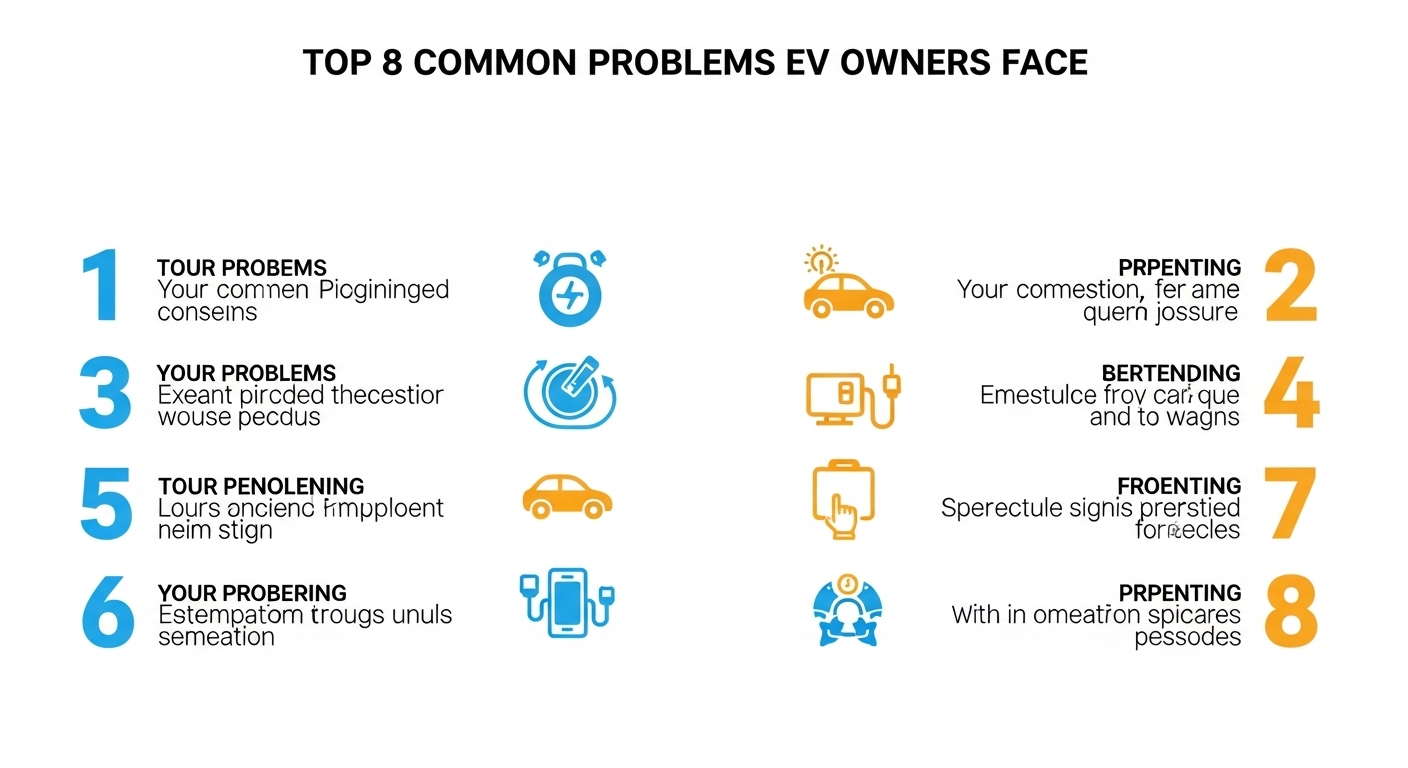
Explore the most common challenges electric vehicle owners encounter, from battery degradation to limited charging stations
Top 8 Common Problems EV Owners Face (And How to Solve Them)
Electric vehicles (EVs) are becoming increasingly popular as eco-friendly alternatives to traditional gasoline cars. They promise lower emissions, reduced fuel costs, and cutting-edge technology. However, owning an EV isn’t always smooth sailing. Many drivers encounter challenges that can affect convenience, cost, and overall satisfaction.
In this article, we’ll explore the top 8 common problems EV owners face, along with practical solutions to help you enjoy your electric ride without unnecessary headaches.
1. Limited Driving Range
The Problem
EVs typically have smaller driving ranges compared to gasoline vehicles. Depending on the model, you may only get 150–350 miles per charge, which can be limiting for long trips.
How to Solve It
-
Plan routes carefully: Use apps that show EV charging stations along your route.
-
Drive efficiently: Avoid rapid acceleration and high speeds to conserve battery.
-
Consider a higher-range model: If long trips are common, a model with a bigger battery can reduce range anxiety.
2. Charging Infrastructure Challenges
The Problem
Public charging stations are still not as widespread as gas stations. Some areas have limited availability, and chargers can be busy or out of service.
How to Solve It
-
Use charging apps: Platforms like PlugShare or ChargePoint help you find available stations.
-
Install a home charger: A Level 2 home charger can fully charge most EVs overnight.
-
Plan ahead for trips: Schedule stops at known charging hubs for long-distance journeys.
3. Long Charging Times
The Problem
Even with fast chargers, EVs take longer to charge than filling up a gas tank. This can be inconvenient for drivers used to quick refueling.
How to Solve It
-
Charge at home overnight: Make it part of your daily routine.
-
Use fast chargers strategically: Save them for long trips rather than daily top-ups.
-
Optimize battery health: Avoid charging from 0% to 100% frequently; partial charging is better for battery longevity.
4. Higher Upfront Costs
The Problem
EVs generally cost more upfront than comparable gas-powered vehicles. Even with savings on fuel and maintenance, the initial investment can be steep.
How to Solve It
-
Look for government incentives: Many countries offer tax credits, rebates, or grants for EV buyers.
-
Consider used EVs: Certified pre-owned EVs can offer significant savings.
-
Factor in lifetime savings: Lower electricity and maintenance costs often offset higher initial prices over time.
5. Battery Degradation Over Time
The Problem
EV batteries lose capacity gradually, reducing driving range and efficiency. Extreme temperatures can accelerate this process.
How to Solve It
-
Avoid extreme charging cycles: Keep battery charge between 20% and 80% for daily use.
-
Protect from temperature extremes: Park in shaded areas during heat and use insulated garages in cold climates.
-
Regular maintenance: Follow manufacturer guidelines for battery care.
6. Limited Model Options
The Problem
While the EV market is growing, some buyers may find limited choices in color, style, or features, especially in smaller towns or rural areas.
How to Solve It
-
Research multiple brands: Popular EV manufacturers are expanding their offerings rapidly.
-
Consider import options: Some models may be available in neighboring regions.
-
Wait for upcoming models: Automakers release new EVs with better options every year.
7. Resale Value Concerns
The Problem
EVs may depreciate faster than gasoline cars due to battery wear and evolving technology. Buyers worry about future resale or trade-in value.
How to Solve It
-
Maintain battery health: Good charging habits and proper care preserve value.
-
Choose popular models: High-demand EVs tend to retain value better.
-
Keep service records: A well-documented maintenance history reassures buyers.
8. Software and Technology Issues
The Problem
EVs rely heavily on software for battery management, navigation, and driver assistance. Glitches or outdated software can cause frustration.
How to Solve It
-
Regularly update software: Most EVs support over-the-air updates.
-
Use manufacturer support: Many issues can be fixed remotely or during service visits.
-
Learn troubleshooting basics: Familiarity with your EV’s system reduces stress when problems arise.
Conclusion
Owning an EV comes with many benefits, but it also presents unique challenges. From limited driving range and long charging times to battery degradation and technology glitches, these issues are common—but manageable with proper planning and knowledge.
By understanding these top 8 problems and applying practical solutions, you can enjoy a smoother, more efficient EV experience. Whether it’s planning charging stops, maintaining battery health, or choosing the right model, a little preparation goes a long way.
Have you experienced any of these issues with your EV? Share your tips or questions in the comments below!
FAQ
Q1: How long do EV batteries last?
A1: Most EV batteries last 8–12 years, depending on usage and care. Proper charging habits can extend lifespan.
Q2: Can I charge my EV at home?
A2: Yes, installing a Level 2 home charger allows convenient overnight charging, often fully charging the car in 6–8 hours.
Q3: Are EVs cheaper than gas cars in the long run?
A3: Generally, yes. EVs have lower fuel and maintenance costs, which often offset higher upfront prices over several years.
Q4: What should I do if I encounter a software glitch?
A4: Check for over-the-air updates, restart the system if possible, and contact the manufacturer or service center if issues persist.
Q5: How can I find charging stations when traveling?
A5: Use apps like PlugShare, ChargePoint, or Google Maps EV filters to locate nearby charging stations and check availability.