Why EV Charging Infrastructure Is Still Lagging in 2026 — Key Challenges, Real Costs, and What Comes Next
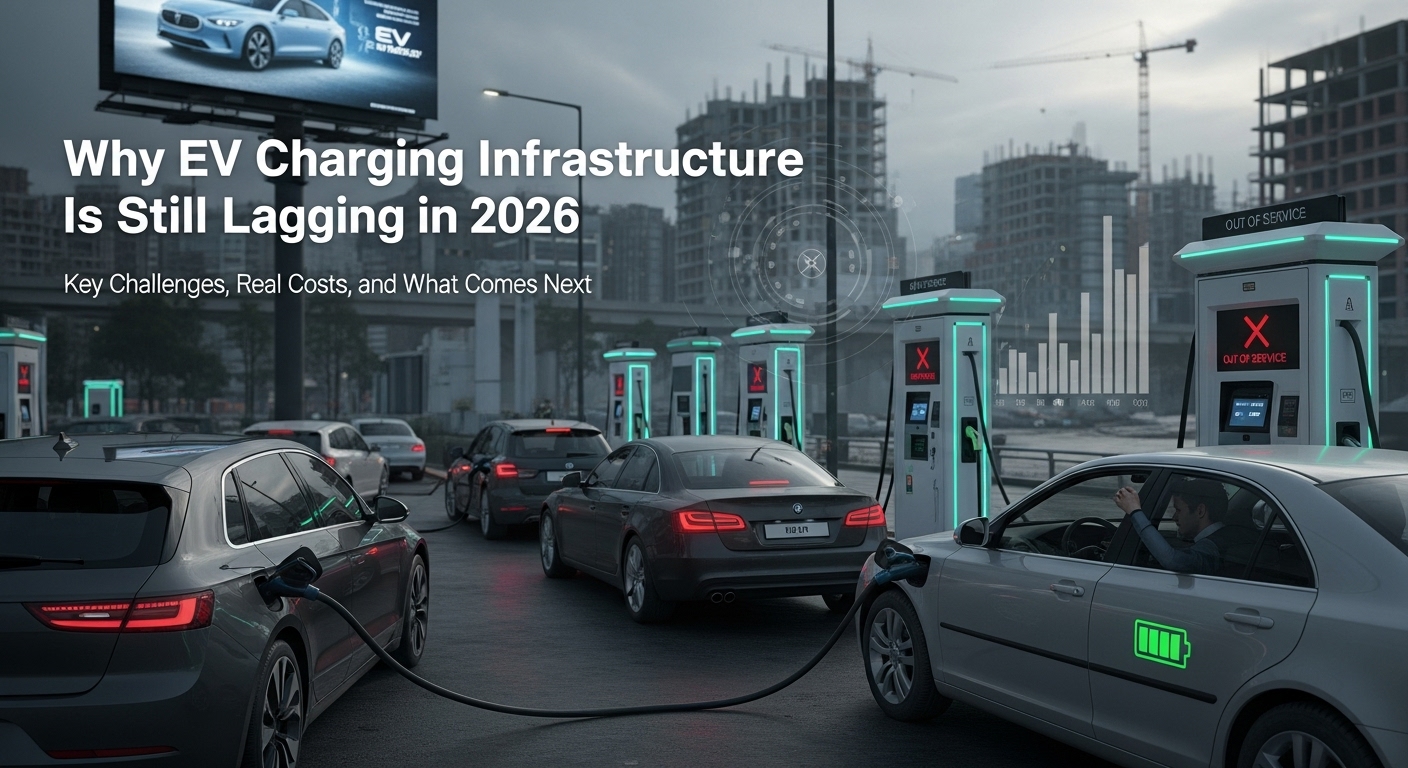
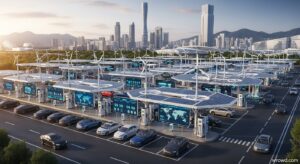
A crowded electric vehicle charging station shows why EV charging infrastructure remains insufficient despite the rapid growth of electric cars in 2026.
Why EV Charging Infrastructure Is Still Lagging in 2026 — Key Challenges, Real Costs, and What Comes Next
Electric vehicles (EVs) are no longer a futuristic concept. By 2026, millions of drivers worldwide have switched to electric cars to save money on fuel, reduce emissions, and future-proof their transportation. Yet one major problem remains unresolved: EV charging infrastructure is still lagging behind demand.
Despite government incentives, rising EV sales, and increased public awareness, many drivers still struggle to find reliable, fast, and affordable charging stations. This gap between EV adoption and charging availability has become one of the biggest barriers to widespread electric vehicle use.
In this article, we’ll explore why EV charging infrastructure is still lagging in 2026, examine the financial, technical, and policy challenges involved, and explain what needs to happen next. Whether you’re an EV owner, a potential buyer, or simply curious about the future of transportation, this guide will give you clear, trustworthy insights.
The Rapid Growth of EVs vs. Slow Infrastructure Development
EV Adoption Is Moving Faster Than Expected
Over the past few years, EV adoption has accelerated due to:
-
Rising fuel prices
-
Government tax credits and rebates
-
Improved battery range and performance
-
Lower long-term maintenance costs
High-intent search terms like “electric vehicle charging cost,” “EV tax incentives,” and “home EV charger installation” continue to grow, showing strong consumer interest.
However, charging infrastructure has not kept pace.
Charging Networks Are Playing Catch-Up
While EV sales grow at double-digit rates in many regions, public charging station expansion remains slow and uneven. Urban centers often see progress, but rural areas, highways, and apartment complexes are still underserved.
This mismatch creates frustration and limits confidence among new EV buyers.
High Installation Costs Are Slowing Expansion
The Real Cost of EV Charging Stations
One of the biggest reasons EV charging infrastructure is lagging is cost. Installing charging stations is not cheap.
Key expenses include:
-
Electrical grid upgrades
-
Construction and permitting fees
-
Hardware and software costs
-
Ongoing maintenance and network management
A single DC fast charging station can cost tens of thousands of dollars, making ROI uncertain for private investors.
Grid Upgrades Add Another Layer of Expense
Many locations simply don’t have the electrical capacity needed to support fast chargers. Upgrading transformers, substations, and power lines adds delays and raises costs further.
High-CPC keywords such as “EV charging station installation cost” and “commercial EV charger pricing” reflect how important this issue is to businesses and property owners.
Uneven Government Policies and Incentives
Incentives Exist, but They’re Not Always Practical
While many governments offer incentives for EV charging infrastructure, these programs often suffer from:
-
Complex application processes
-
Long approval timelines
-
Limited funding windows
-
Inconsistent regulations across regions
This discourages small businesses, landlords, and local investors from participating.
Lack of Long-Term Infrastructure Planning
In some cases, charging stations are installed without proper planning, leading to:
-
Poor location choices
-
Underutilized chargers
-
Maintenance issues after initial funding ends
Without a unified national or regional strategy, progress remains fragmented.
Urban Density and Real Estate Challenges
Space Is a Major Limitation
In dense cities, installing EV chargers is far more complicated than it seems. Challenges include:
-
Limited parking availability
-
Old building wiring systems
-
Shared parking in apartment complexes
-
Disputes between tenants and property owners
Searches for “EV charging for apartments” and “multi-family EV charging solutions” highlight a growing pain point.
Home Charging Is Not an Option for Everyone
While home charging is ideal, millions of drivers live in apartments or rental properties where installation isn’t allowed or feasible. This increases reliance on public charging, putting more strain on existing networks.
Reliability and User Experience Problems
Broken or Slow Chargers Hurt Trust
Many EV drivers report:
-
Out-of-service charging stations
-
Incompatible connectors
-
Slow charging speeds
-
Poor app reliability
These issues reduce confidence and discourage long-distance EV travel.
Lack of Standardization
Different networks use different apps, pricing models, and access systems. This lack of standardization creates confusion and friction for users.

Private Investment Hesitation
Profitability Is Still Uncertain
Unlike gas stations, EV charging stations don’t always generate consistent revenue. Utilization rates vary widely by location and time of day.
Investors worry about:
-
Slow return on investment
-
Rapid technology changes
-
Future pricing regulations
Until profitability becomes more predictable, private capital will remain cautious.
Workforce and Supply Chain Limitations
Skilled Labor Shortages
Installing and maintaining EV chargers requires trained electricians and technicians. In many regions, there simply aren’t enough qualified workers to meet demand.
Equipment Delays
Global supply chain issues have improved since earlier years, but delays in charging hardware and grid components still slow projects.
What Needs to Change for Faster Progress
To close the gap between EV adoption and charging availability, several actions are critical:
1. Smarter Infrastructure Planning
-
Focus on high-traffic and underserved areas
-
Coordinate with grid operators early
-
Prioritize reliability over sheer quantity
2. Simplified Incentive Programs
-
Faster approvals
-
Clearer requirements
-
Long-term funding commitments
3. Better User Experience
-
Standardized payment systems
-
Real-time charger status updates
-
Reliable maintenance schedules
4. Stronger Public-Private Partnerships
Governments and private companies must share risk and investment to accelerate deployment.
The Bigger Picture: Why This Still Matters in 2026
EV charging infrastructure is not just about convenience. It directly impacts:
-
Climate goals
-
Energy independence
-
Consumer confidence
-
Economic growth
Until charging becomes as easy and reliable as fueling a gas car, mass adoption will remain limited.
Even in 2026, EV charging infrastructure is still lagging due to high costs, grid limitations, uneven policies, urban challenges, and investment uncertainty. While progress is happening, it’s not fast or coordinated enough to match the rapid growth of electric vehicles.
Solving this problem requires smarter planning, better incentives, improved user experience, and long-term collaboration between governments and private companies.
If you’re an EV owner or considering making the switch, your voice matters. Share your experiences, support local infrastructure projects, and stay informed. The future of transportation depends on it.
Frequently Asked Questions (FAQ)
1. Why is EV charging infrastructure still behind EV sales in 2026?
Because EV adoption has grown faster than grid upgrades, charger installation, and long-term infrastructure planning.
2. Is home EV charging still the best option?
Yes, home charging remains the most affordable and convenient option, but it’s not available to everyone, especially apartment dwellers.
3. Are governments doing enough to support EV charging?
Incentives exist, but inconsistent policies and slow approvals limit their effectiveness.
4. Will EV charging improve in the next few years?
Yes, but meaningful improvement depends on better coordination, investment, and standardization.
5. What is the biggest barrier to EV charging expansion?
High installation costs combined with grid limitations and uncertain profitability remain the biggest obstacles.