6 Countries Leading Electric Truck Adoption: Driving the Future of Sustainable Freight
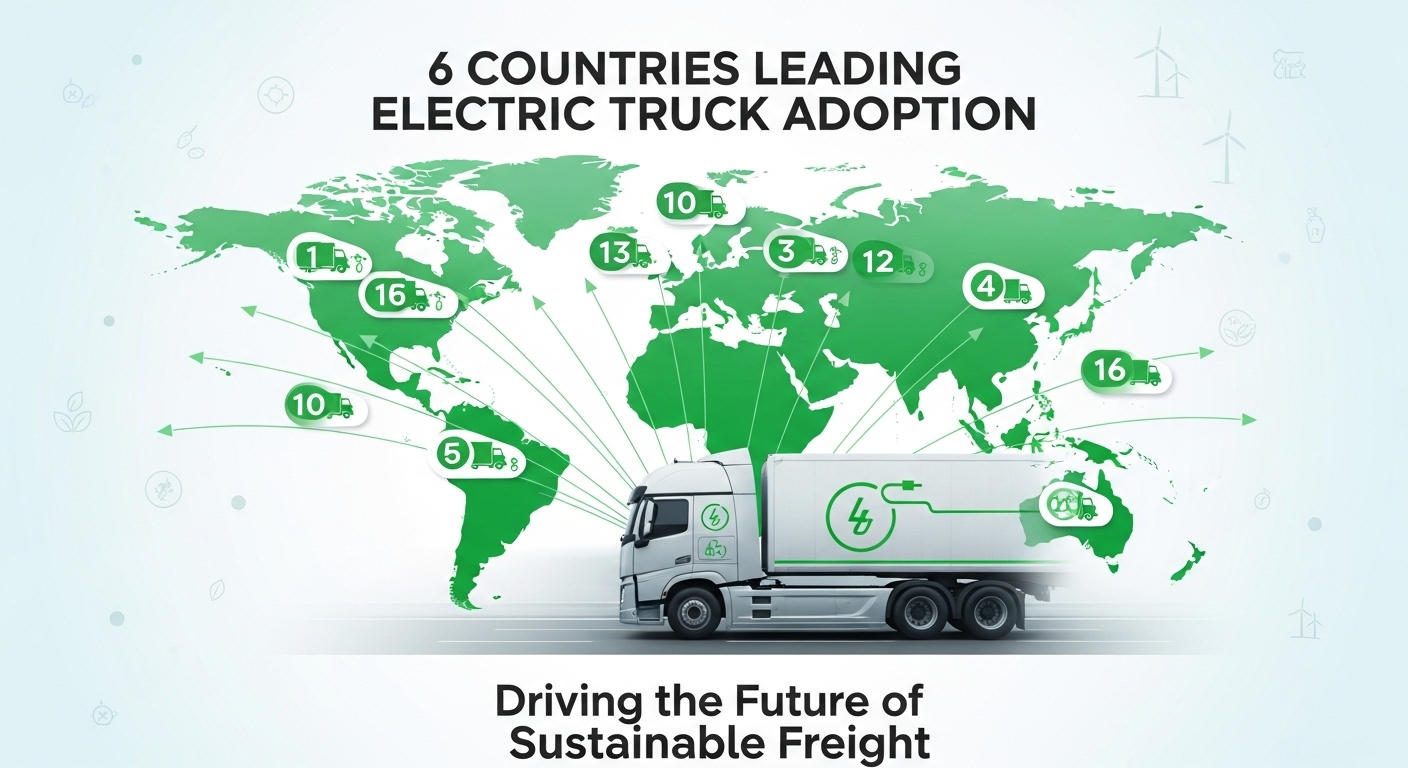
Electric trucks gaining momentum in six key countries, showcasing the global shift toward sustainable freight transportation.
6 Countries Leading Electric Truck Adoption: Driving the Future of Sustainable Freight
Electric trucks are no longer a futuristic concept—they are transforming global logistics and sustainable transportation. With rising fuel costs, stricter emission regulations, and growing environmental awareness, many countries are accelerating the adoption of electric trucks. In this article, we explore six nations that are leading the way in this green revolution, highlighting trends, government incentives, and the future of commercial electric vehicles.
1. United States
The United States is making significant strides in the electric truck market. With companies like Tesla, Rivian, and Freightliner introducing electric trucks, the logistics industry is gradually shifting from diesel-powered fleets to zero-emission vehicles.
Key Drivers:
-
Government Incentives: Federal tax credits and state-level rebates encourage companies to adopt EV trucks.
-
Market Trends: Growing demand for last-mile delivery EVs and commercial fleets.
-
Popular Models: Tesla Semi, Freightliner eCascadia, Rivian R1T for small-scale commercial deliveries.
Challenges: Infrastructure gaps and higher upfront costs remain barriers, but ongoing investments in charging networks are reducing these obstacles.
2. China
China leads the world in electric truck adoption, thanks to strong government support and a booming manufacturing sector.
Key Drivers:
-
Government Policies: Subsidies for commercial EVs and strict emission standards for urban trucks.
-
Market Trends: Rapid expansion in e-commerce delivery fleets and urban logistics.
-
Popular Models: BYD T6, Sinotruk Howo EV, Dongfeng EQ2050.
Challenges: Battery lifespan and heavy truck adoption in rural areas are still under development, but China’s commitment to sustainable transportation is unmatched.
3. Germany
Germany is at the forefront of Europe’s electric truck movement, leveraging its automotive expertise and robust infrastructure.
Key Drivers:
-
Government Support: Grants for electric commercial vehicles and low-emission zones in cities.
-
Market Trends: Growing fleet electrification in urban logistics and construction sectors.
-
Popular Models: Mercedes-Benz eActros, MAN eTGM, Volkswagen e-Delivery trucks.
Challenges: High costs and the need for more public charging stations are slowing mass adoption, though industry collaboration is helping bridge gaps.
4. Norway
Norway has one of the highest EV adoption rates per capita, including electric trucks. Its strong environmental policies make it a model for other countries.
Key Drivers:
-
Incentives: Tax exemptions, free tolls, and subsidies for electric trucks.
-
Market Trends: Focus on urban delivery and waste management fleets.
-
Popular Models: Think City Electric Truck, Scania Electric trucks for commercial use.
Challenges: Smaller population limits large-scale commercial adoption, but Norway serves as a testing ground for innovative EV solutions.
5. Japan
Japan is leveraging its technological prowess to adopt electric trucks in logistics and industrial sectors.
Key Drivers:
-
Government Initiatives: Grants for EV trucks and investments in charging infrastructure.
-
Market Trends: Focus on last-mile delivery and urban logistics electrification.
-
Popular Models: Hino Dutro EV, Mitsubishi Fuso eCanter, Nissan e-NV200 for lighter loads.
Challenges: Limited range for heavy trucks and high costs are barriers, but Japan continues investing in battery efficiency and EV infrastructure.

6. United Kingdom
The UK is rapidly moving toward commercial EV adoption, particularly in urban delivery and logistics services.
Key Drivers:
-
Government Policies: Low Emission Vehicle grants and city-specific emission zones.
-
Market Trends: Growing interest in electric vans and medium-duty trucks for delivery services.
-
Popular Models: Arrival Van, Volvo FL Electric, Nissan e-NV200.
Challenges: Charging infrastructure in rural areas remains a challenge, but urban logistics are seeing significant electrification.
Conclusion
The adoption of electric trucks is accelerating worldwide, driven by government incentives, environmental concerns, and innovative EV technologies. The United States, China, Germany, Norway, Japan, and the UK are leading the charge, each with unique strategies to overcome challenges and promote sustainable freight. As infrastructure improves and technology advances, electric trucks are poised to become a mainstream solution for commercial transportation.
Take Action: Consider exploring electric trucks for your logistics or business operations. Share your thoughts or experiences in the comments below!
FAQ
1. Why are electric trucks important for the environment?
Electric trucks reduce greenhouse gas emissions and air pollution, especially in urban areas, contributing to cleaner and healthier cities.
2. Are electric trucks more expensive than diesel trucks?
Electric trucks typically have a higher upfront cost but lower operating and maintenance costs, making them cost-effective over time.
3. How long does it take to charge an electric truck?
Charging times vary by model and charger type, ranging from 1 hour with fast chargers to 8–10 hours with standard charging stations.
4. Which countries offer the best incentives for electric trucks?
Countries like Norway, China, and Germany provide significant subsidies, tax breaks, and grants to encourage EV truck adoption.
5. Can electric trucks handle heavy-duty freight?
Yes, modern electric trucks like the Tesla Semi, eCascadia, and Mercedes-Benz eActros are designed for heavy-duty transportation with competitive range and payload capacity.