
Introduction
Electric trucks are no longer a futuristic idea. In 2026, they are stronger, smarter, and—most importantly—faster to charge than ever before. For many drivers, charging speed is the final barrier between curiosity and commitment. Whether you use your truck for work, towing, or daily commuting, downtime matters.
In this guide, we’ll explore the fastest charging electric trucks in 2026, explain how ultra-fast charging works, and highlight what to look for before buying. We’ll also cover key factors like DC fast charging speed, battery technology, charging infrastructure, home EV charger installation cost, and total cost of ownership—all essential topics for smart electric vehicle buyers.
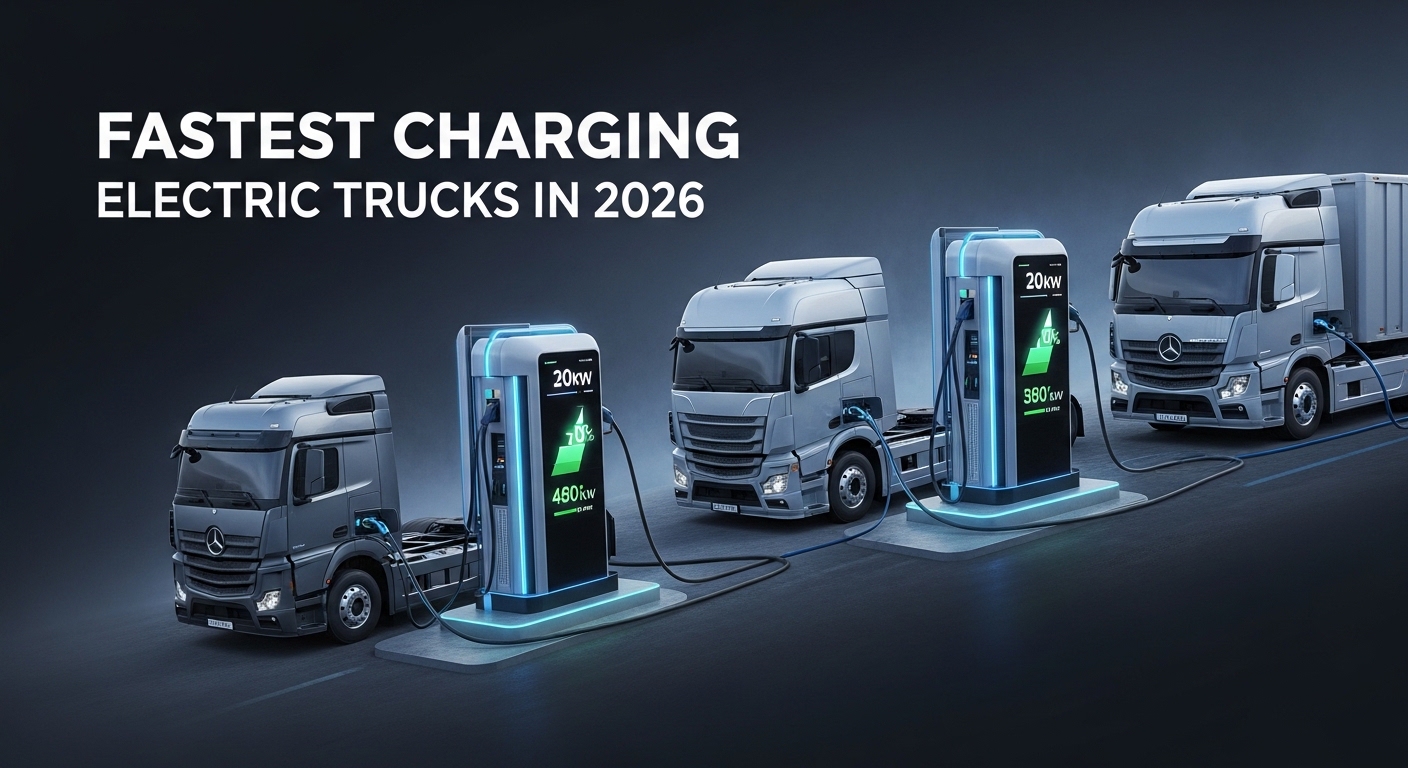
If you’re searching for a long-range electric pickup with minimal charging downtime, this article will help you make a confident and informed decision.
Why Charging Speed Matters in 2026
Charging speed is more than a technical specification. It directly affects:
-
Daily usability
-
Long-distance travel convenience
-
Commercial fleet efficiency
-
Resale value
-
Overall electric truck ownership experience
In 2026, many new electric trucks support ultra-fast DC charging up to 350 kW, allowing drivers to charge from 10% to 80% in under 25 minutes in ideal conditions.
For business owners and contractors, fast charging reduces downtime. For families, it means fewer long stops during road trips. For fleet operators, it improves productivity and lowers operational costs.
How Fast Charging Works
Before looking at specific trucks, it helps to understand the basics.
Level 2 Charging vs. DC Fast Charging
Level 2 Charging
-
Usually installed at home
-
7–19 kW power output
-
Adds 20–40 miles per hour of charging
-
Lower home EV charger installation cost compared to DC systems
DC Fast Charging
-
Found at public charging stations
-
150 kW to 350 kW power output
-
Adds 150–250+ miles in 20–30 minutes
-
Ideal for highway travel and commercial use
The fastest charging electric trucks in 2026 are optimized for high-power DC fast charging networks with improved battery thermal management systems.
Fastest Charging Electric Trucks in 2026
Below are some of the top-performing electric pickups in terms of charging speed, range recovery, and advanced battery efficiency.
Tesla Cybertruck (Latest 2026 Configuration)
The latest version of the Cybertruck remains one of the leaders in charging performance.
Charging Highlights:
-
Up to 250+ kW DC fast charging
-
10–80% charge in approximately 20–25 minutes
-
Advanced battery cooling system
The truck benefits from a large fast-charging network, making long-distance travel easier. Combined with strong towing capacity and impressive range, it remains a top choice for drivers seeking both performance and efficiency.
Ford F-150 Lightning (Updated 2026 Model)
The updated Lightning continues to improve its charging curve and battery management system.
Charging Highlights:
-
Up to 155–180 kW DC fast charging
-
Around 15–54 miles added in 10 minutes (ideal conditions)
-
Smart home integration for energy management
For contractors and small business owners, this truck offers solid commercial EV tax credit eligibility and competitive electric truck financing options.
Rivian R1T (2026 Refresh)
The 2026 refresh focuses heavily on efficiency improvements and faster charging consistency.
Charging Highlights:
-
Up to 220 kW DC fast charging
-
Optimized battery chemistry
-
Improved energy recovery per minute
Rivian’s refined software helps drivers locate high-speed chargers and precondition the battery before arrival—an important feature for maximum charging speed.
Chevrolet Silverado EV (2026 Extended Range)
The Silverado EV continues to push charging performance with strong peak rates.
Charging Highlights:
-
Up to 350 kW DC fast charging
-
Approximately 100 miles added in 10 minutes (manufacturer estimates)
-
Large battery pack for extended range
This makes it one of the best options for drivers looking for a long range electric pickup with ultra-fast charging capability.
GMC Sierra EV (2026 Performance Trim)
The Sierra EV shares advanced battery architecture with other GM electric trucks but focuses on premium features.
Charging Highlights:
-
Up to 350 kW charging capability
-
Fast energy recovery during road trips
-
High towing electric truck performance
For drivers interested in combining luxury and utility, this model balances charging speed with comfort.
What Determines Charging Speed?
Charging speed depends on more than just peak kW numbers. Here are the main factors:
1. Battery Chemistry
Newer battery technologies allow:
-
Higher charging rates
-
Better thermal stability
-
Longer battery lifespan
Solid-state battery research continues, but most 2026 trucks still use advanced lithium-ion variants.
2. Charging Curve
The “charging curve” determines how long a truck can maintain high speeds. A truck that briefly hits 350 kW but quickly drops may not be faster overall than one that maintains 220 kW consistently.
3. Battery Preconditioning
Modern electric trucks automatically warm or cool the battery before arriving at a charging station. This can reduce charging time significantly.
4. Charging Infrastructure
Access to reliable ultra-fast EV charging stations is critical. Urban areas now offer wider 350 kW coverage, but rural access can vary.
When researching, consider:
-
Highway charging network availability
-
Public charging reliability
-
Fleet charging solutions if used commercially
Cost Considerations for Fast Charging
Fast charging offers convenience—but there are cost factors to understand.
Home Charging Setup
While DC fast charging is public, most drivers install a Level 2 charger at home.
Key expenses:
-
Home EV charger installation cost
-
Electrical panel upgrades
-
Smart energy management systems
Installing a quality Level 2 charger reduces reliance on public charging and lowers long-term electricity costs.
Public Charging Costs
Public DC charging typically costs more per kWh than home charging. However, it remains practical for:
-
Road trips
-
Business travel
-
Emergency charging
For fleet owners, negotiated commercial charging contracts can reduce costs significantly.
Electric Truck Ownership Benefits in 2026
Fast charging is just one advantage. Electric truck ownership also offers:
-
Lower fuel costs compared to gasoline
-
Reduced maintenance (fewer moving parts)
-
Quiet operation
-
Strong torque for towing
-
Potential tax incentives
Additionally, total cost of ownership over five years is becoming more competitive with traditional trucks.
How to Choose the Right Fast Charging Electric Truck
Before making a decision, consider:
1. Your Driving Pattern
-
Daily commuting distance
-
Frequency of long trips
-
Towing requirements
2. Access to Charging
-
Home installation feasibility
-
Workplace charging
-
Local fast charging stations
3. Battery Warranty
Look for:
-
8-year battery warranty minimum
-
High-mileage coverage
-
Performance retention guarantees
4. Financing and Incentives
Search for:
-
Electric truck financing options
-
Government EV incentives
-
Commercial fleet tax credits
Are Faster Charging Trucks Always Better?
Not necessarily.
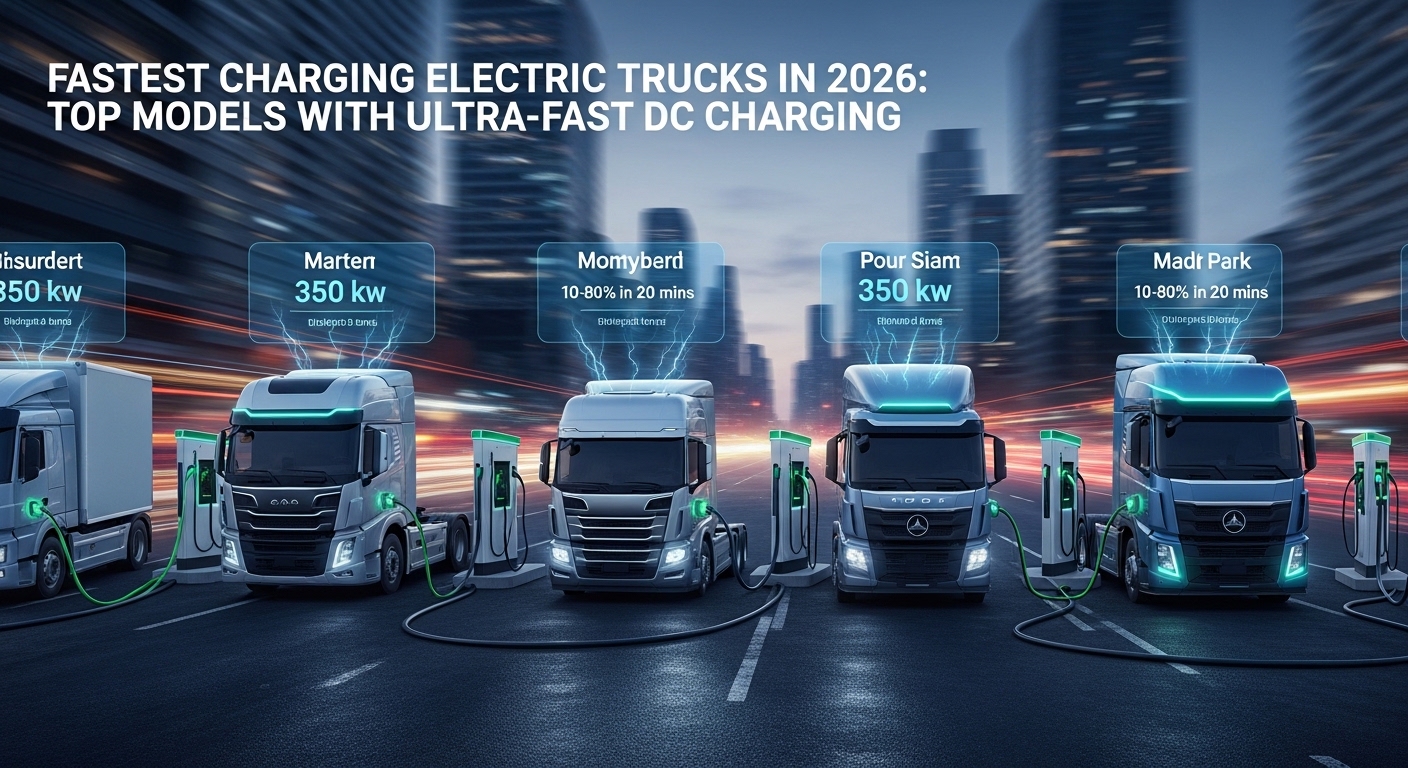
A truck with slightly slower peak charging but better efficiency may deliver similar real-world results. Also, battery longevity matters. Extremely aggressive charging daily may reduce long-term battery health.
Balance:
-
Charging speed
-
Range
-
Efficiency
-
Cost
The Future of Electric Truck Charging
By late 2026 and beyond, we expect:
-
Wider 350 kW charger availability
-
Smarter grid integration
-
Vehicle-to-home energy systems
-
More advanced battery chemistries
Charging times will continue shrinking, making electric trucks even more practical for work and adventure.
Conclusion
The fastest charging electric trucks in 2026 are redefining convenience. With ultra-fast DC charging, improved battery management, and expanding infrastructure, downtime is becoming less of a concern.
If you’re considering switching to an electric pickup, focus on real-world charging performance, total ownership cost, and your daily driving needs—not just peak numbers.
Fast charging capability, combined with long range and strong towing performance, makes modern electric trucks more versatile than ever.
Thinking about upgrading? Compare charging speeds, evaluate incentives, and share your thoughts in the comments—your experience could help other readers make a smarter decision.
FAQ: Fastest Charging Electric Trucks in 2026
1. What is the fastest charging electric truck in 2026?
Some 2026 models support up to 350 kW DC fast charging, allowing 10–80% charging in about 20–25 minutes under ideal conditions.
2. Does fast charging damage electric truck batteries?
Occasional fast charging is safe. However, frequent high-speed charging may slightly impact long-term battery health compared to Level 2 charging.
3. How much does it cost to install a home EV charger?
Home EV charger installation cost varies, typically depending on electrical upgrades and charger type.
4. Are electric trucks good for towing long distances?
Yes. Many 2026 electric trucks offer strong torque and competitive towing capacity, though towing reduces range.
5. Is public fast charging more expensive than home charging?
Yes, public DC fast charging usually costs more per kWh than home electricity, but it provides convenience for travel and emergencies.
Leave a Reply